Quick Answer: Why tankless water heaters leak usually comes down to loose plumbing fittings, failing seals and gaskets, scale from hard water, a dripping pressure relief valve, or condensation that looks like a leak. Start by shutting off power and water, then check the cold water inlet and hot water outlet connections, the relief valve discharge, vent pipes, and the unit cabinet for moisture. If water is coming from inside the cabinet or you see error codes on the display panel, treat it as urgent because water damage, mold growth, and electrical hazards can follow.
Start Here-The 3-Minute Leak Triage (Do This First)
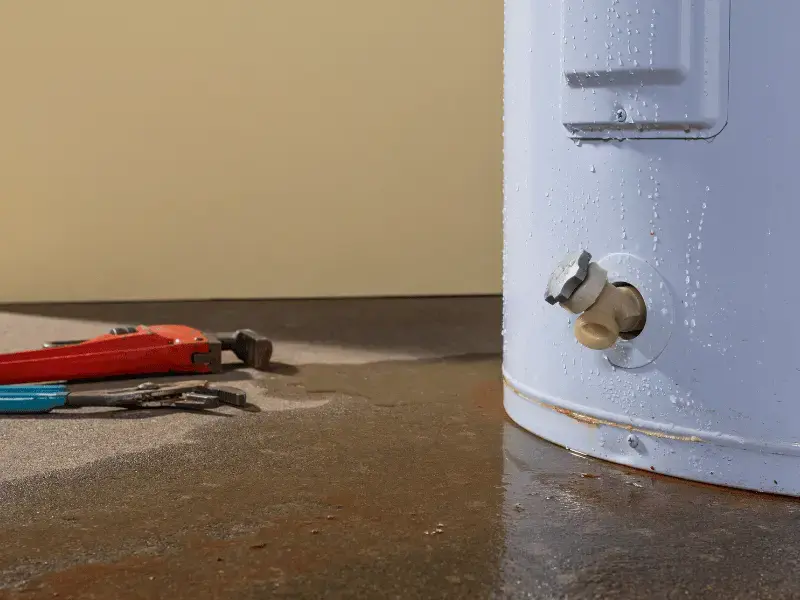
Before you chase the wrong thing, identify whether you’re dealing with an active tankless water heater leak or harmless condensation.
- Kill power safely: switch off the breaker (electric) or turn the unit off (gas) to reduce electrical hazards.
- Stop water: close the service valves / isolation valves if you have them (or the nearest shutoff).
- Dry and re-check: wipe all plumbing fittings, pipe connections, and the cabinet (unit cabinet), then watch where the first fresh moisture appears.
Tip: Put a paper towel under each suspect point (valves, fittings, relief valve, bottom edge). The first wet towel tells you the source faster than guessing.
What Causes a Tankless Water Heater to Leak
Most leaks come from thermal expansion loosening plumbing fittings, worn seals and gaskets, pressure buildup forcing the pressure relief valve to weep, or mineral scale damaging the heat exchanger and internal components.
A leaking tankless water heater is different from a tank unit: it doesn’t store gallons of water, but it does rely on pressurized pipe connections and internal components. That’s why even a “small” drip can cause hidden water damage behind walls or inside cabinets.
Quick fix: If the leak is at an external fitting, gently snug it (don’t crank). Over-tightening can crack a fitting or deform a gasket and create a worse leak.
Common Leak Sources You Can Confirm Without Tools
If you’re researching a problem with tankless water heater symptoms, this section helps you pinpoint the exact leak path.
1) Loose or Failing Water Line Connections
Most common leak point: the cold water inlet and hot water outlet pipe connections. Over time, vibration and thermal expansion can loosen plumbing fittings.
What you’ll see:
- Beads of water at a joint
- Dampness tracking down a pipe
- Drips forming at a compression nut or threaded joint
Tip: Look for mineral deposits or “crust” around the joint old seepage leaves evidence.
2) Pressure Relief Valve Drip (Safety Discharge)
If your pressure relief valve is wet or dripping, it can mean:
- excessively high water pressure
- a failed relief valve
- a missing/failed expansion tank
- rising internal pressure during heating cycles
Quick fix: Don’t cap the discharge line. Instead, check if your home pressure feels unusually strong; relief valve discharge often correlates with pressure spikes.
3) Condensation Mistaken for a Leak
High-efficiency units can create condensation, especially during cold weather or heavy demand. Condensation can drip from vent pipes, inside the venting system, or along the drainage line.
How to tell it apart:
- Condensation appears while the unit runs and often stops shortly after.
- A true leak continues even when the unit is off and dry.
Tip: Condensation frequently forms above the cabinet and runs down so the “wet spot” may not be the source.
4) Heat Exchanger Crack or Failure (Inside the Cabinet)
The heat exchanger is the most critical part. Hard water and mineral scale restrict flow, contribute to overheating, and can lead to cracks.
Red flags:
- Water coming from inside the unit cabinet
- Rust or corrosion marks near internal components
- Repeated error codes on the display panel
- Intermittent temperature issues plus drips
This is typically not a DIY repair. Damage may affect manufacturer warranty coverage if flushing/descaling wasn’t done.
5) Installation or Venting Errors
A lot of leaks trace back to improper installation, including:
- incorrect pipe sizing
- missing isolation valves / service valves
- poor support leading to vibration on fittings
- venting system issues and vent blockage that cause condensation and drainage problems
If your unit was installed without service valves, it’s harder to maintain which increases the chance of future leaks.
Leak Location Map
Use this table to narrow the cause in under a minute.
| What You Notice | Most Likely Source | What It Usually Means | What To Do Next |
| Drip at inlet/outlet | cold water inlet / hot water outlet | loose connections or worn seals and gaskets | dry, re-check, snug gently |
| Drip at discharge pipe | pressure relief valve | pressure buildup, failed valve, missing expansion tank | do not cap, check pressure, call pro |
| Moisture near vents | vent pipes / venting system | condensation or vent blockage | verify slope/drainage line |
| Water from bottom edge | cabinet leak path | internal components or heat exchanger issue | shut down, inspect for error codes |
| Wet inside cabinet | heat exchanger / internal components | scale, corrosion, overheating | urgent professional inspection |
| Musty smell nearby | water damage | hidden wet materials can grow mold | dry area, dehumidify, fix source fast |
How to Fix a Leaking Tankless Water Heater
Fixing a leak depends on whether it’s an external connection, a valve discharge, condensation, or an internal failure. Start with safe shutdown, then isolate the exact drip point before replacing parts.
Here’s the most practical sequence to follow:
- Shut off power and water (use service valves if available).
- Confirm the leak source with the “dry-and-watch” method.
- Fix only what matches the source (don’t shotgun parts).
- Restore and monitor (check again after one full heat cycle).
Now the targeted fixes:
- Loose connections: re-seat thread tape on threaded joints (if needed), replace worn seals and gaskets, and re-tighten to manufacturer spec.
- Pressure relief valve dripping: verify if an expansion tank is present and functional; relief valve may need replacement.
- Condensation: confirm correct venting system slope, proper drainage line routing, and clear vent blockage.
- Scale-related leaks: schedule flushing/descaling; heavy mineral deposits can damage internal components.
- Internal cabinet leaks: stop using the system and call a professional heat exchanger. Damage is expensive and time-sensitive.
Important tip: If you keep restarting a unit that’s leaking internally, you risk electrical hazards and accelerated corrosion.
Step-by-Step “Source Identification” Checklist (Do This In Order)
If your tankless water heater dripping is driving you crazy, this order prevents wasted time.
- Step 1: Check the cold water inlet and hot water outlet joints first.
- Step 2: Check the pressure relief valve discharge area next.
- Step 3: Inspect vent pipes and the venting system for condensation trails.
- Step 4: Look at the bottom edge: is it dripping from above or from inside?
- Step 5: Open the cabinet only if you’re qualified internal components + electricity is a bad mix.
“Dripping From Bottom” vs “Leaking From Bottom” (They’re Not Always The Same)
A tankless water heater dripping from bottom can be water traveling down from a higher fitting, while tankless water heater leaking from bottom usually suggests internal cabinet moisture or a failed component.
Quick Differentiator Test
Dry everything above the bottom edge (inlet/outlet fittings, relief valve area). Place a dry paper towel at the lowest point.
- If the towel stays dry until the unit runs, suspect condensation.
- If it wets even when the unit is off, suspect a real leak path.
Tankless hot water heater leaking often means “water is near the unit,” not necessarily “the unit is the source.” Prove the drip location before concluding.
Why Scale and Hard Water Turn Small Seepage Into Real Leaks
Hard water causes mineral scale and mineral deposits that restrict flow, raise internal pressure, and strain seals and gaskets leading to leaks and overheating.
When scale forms, it can:
- reduce heat transfer in the heat exchanger
- create restricted water flow that spikes temperatures
- increase pressure buildup during high demand
- accelerate corrosion on internal components
This is why annual maintenance matters even if your unit “seems fine.”
The Leak Risk You Should Never Ignore (Gas + Water)
A tankless water heater gas leak is a separate hazard from water leakage, but they can occur together if installation or internal issues are present and treat it as an emergency.
If you smell gas:
- Turn off the gas supply if safe.
- Ventilate the area.
- Do not operate electrical switches near the unit.
- Call your gas provider or a licensed plumber immediately.
Prevention Plan (Keeps Leaks From Coming Back)
A lot of leak calls happen after predictable wear and maintenance gaps. Use this plan to protect the unit and your home.
- Annual flush/descale (more often with hard water).
- Inspect pipe connections and plumbing fittings for early seepage.
- Check the pressure relief valve discharge line for any weeping.
- Confirm venting system and vent pipes are unobstructed (no vent blockage).
- Keep service access clear so a technician can inspect quickly.
Here’s a practical schedule:
| Frequency | What To Check | Why It Matters |
| Monthly | cabinet moisture + floor area | catches water damage early |
| Quarterly | inlet/outlet pipe connections | stops slow seepage before it worsens |
| Every 6–12 months | flush/descale | prevents mineral scale + overheating |
| Yearly | relief valve + expansion tank | reduces pressure buildup and valve discharge |
| Yearly | venting system inspection | prevents condensation and unsafe exhaust issues |
Quick Signs You Need a Pro Right Now
If you see any of the following, don’t DIY call a trained tankless water heater expert because internal leaks and safety systems can escalate fast.
- Water leaking from inside the unit cabinet
- Repeated error codes on the display panel
- Visible corrosion or rust near internal components
- Active leak plus electrical hazards (wet outlets, buzzing, tripping breaker)
- Ongoing dripping after tightening external fittings
Practical “Do This / Don’t Do This”
- Do shut off water and power before inspection.
- Do identify the source with paper towels and a dry-and-watch test.
- Do take photos of the leak for warranty and diagnosis.
- Don’t cap a pressure relief valve discharge.
- Don’t overtighten fittings (it can crack a connection).
- Don’t ignore slow seepage mold growth can start from persistent dampness.
Common Causes Ranked by Real-World Frequency
- Loose connections at cold water inlet / hot water outlet
- Pressure relief valve weeping due to pressure buildup
- Condensation that mimics leaks around vent pipes
- Mineral scale and restricted water flow stressing the heat exchanger
- Improper installation (incorrect pipe sizing, missing service valves)
- Corrosion/rust on pipe connections and internal components
Local Context That Matters in Homes
Neighbourhoods with older properties (and mixed plumbing retrofits) often see more vibration at fittings, older pipe materials, and inconsistent pressure regulation conditions that make leaks show up sooner. If your unit sits in a tight utility closet, cabinet moisture can go unnoticed and become water damage quickly.
If you’re seeing repeated symptoms and want it handled cleanly, an experienced team can pressure-check the system, verify expansion tank sizing, and correct venting/drainage to keep leaks from recurring especially when you’re trying to choose the best plumbing company for ongoing maintenance.
Call John’s Plumbing & Drain Services (Fix It Before Damage Spreads)
If you’re dealing with tankless water heaters leak questions and want the source identified fast without guesswork call John’s Plumbing & Drain Services at 3234227485. We’ll pinpoint the leak location, check pressure relief valve discharge, verify venting system and drainage, and recommend the safest long-term fix.
FAQs About Tankless Water Heater Leak
Why tankless water heaters leak even though they don’t store water?
They don’t store water, but they still run under pressure and rely on pipe connections, seals and gaskets, valves, and a heat exchanger any of those can fail or loosen over time.
How do I tell if it’s condensation or a real leak?
Condensation usually appears while the heater runs and stops afterward. A real leak continues even when the unit is off and dry, and often leaves mineral deposits or corrosion trails.
What does it mean if the pressure relief valve is dripping?
It often indicates pressure buildup, a faulty relief valve, or a missing/failed expansion tank. Don’t cap it, this is a safety feature.
What if I see water inside the cabinet?
Treat it as urgent. Internal components, electrical parts, or the heat exchanger may be involved. Shut the unit down and get a professional inspection.
Can hard water cause leaks in tankless heaters?
Yes. Hard water creates mineral scale and mineral deposits that restrict flow and can overheat the heat exchanger, which stresses internal components and increases leak risk.
When should I replace instead of repair?
If the heat exchanger is cracked, if repairs are frequent, or if warranty coverage is limited due to missed maintenance, replacement can be the more reliable option.