Quick Answer: A small leak under the sink is usually caused by a loose supply line connection, a worn-out faucet cartridge, a cracked P-trap, or a failed drain gasket. While it may seem minor, even a slow drip can cause water damage to the cabinet floor, promote mold growth, and attract pests. Tightening connections or replacing gaskets may fix it, but persistent drips need a plumber to identify the exact source.
You open the cabinet under the kitchen sink to grab a sponge and notice the shelf liner is damp. Or there is a small puddle forming around the base of the P-trap. It is easy to toss a towel underneath and close the door, but that leak is not going to fix itself, and every day it runs is a day it is damaging the cabinet, the subfloor, and potentially the structure beneath.
Supply Line Connection Leaks
The hot and cold supply lines that feed your faucet connect via compression fittings or braided stainless steel connectors. Over time, these connections can loosen from vibration, or the rubber washers inside them can deteriorate. A supply line drip is usually visible as water running down the connector itself, and tightening the fitting a quarter turn may stop it.
If tightening does not work, the connector or its internal washer needs replacement. This is a straightforward fix for a plumber, and it also presents a good opportunity to replace old gate-style shut-off valves with modern quarter-turn ball valves that are more reliable in an emergency.
P-Trap and Drain Connection Leaks
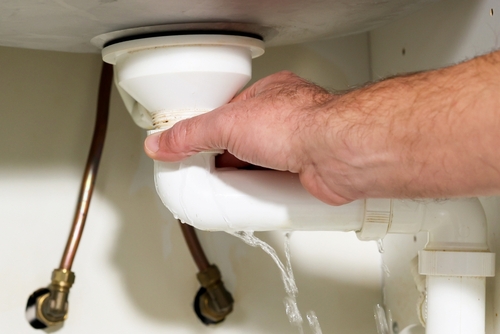
The P-trap is the curved section of pipe directly beneath the sink drain. It holds a small amount of water that blocks sewer gas from entering your home. P-traps are made of either PVC or chrome-plated brass, and both can develop leaks at the slip-joint connections where the trap meets the tailpiece above and the wall pipe below.
Loose slip-joint nuts are a common and easy fix. If the P-trap itself has cracked or corroded through, replacement is needed. PVC replacement traps are inexpensive and widely available.
Faucet Base Leaks
If water appears around the base of the faucet rather than under the connections, the O-rings or cartridge inside the faucet body are worn. Water seeps past the seal and runs down the faucet base onto the countertop, then drips through the mounting hole into the cabinet below. This type of leak often goes undetected because it only occurs when the faucet is running and the water follows a hidden path.
A faucet repair or replacement resolves this. If the faucet is old and the leak indicates general wear, upgrading the faucet during a kitchen update is a practical move.
Garbage Disposal Connection Leaks
If your Glendale home has a garbage disposal, the connection between the disposal and the drain tailpiece or dishwasher inlet can develop leaks from vibration and age. The mounting ring between the disposal and the sink flange is another common leak point. These connections loosen over time and may need retightening or gasket replacement.
Why You Should Not Ignore It
A small under-sink leak does not stay small. Water damages particle board cabinet floors within weeks, and the dark, enclosed environment under a sink is ideal for mold. The leak also attracts insects and creates conditions that accelerate wood rot in the subfloor. What starts as a $50 repair becomes a $500 cabinet replacement and a $1,000 subfloor repair if left unaddressed.
FAQs
Can I fix a leak under the sink myself? Loose connections and worn gaskets are within reach for handy homeowners with basic tools. If you cannot identify the source, if tightening connections does not stop the drip, or if the leak involves supply lines under pressure, call a professional plumber for a proper diagnosis.
How do I tell if the leak is from the supply line or the drain? Run the faucet and watch. If the drip occurs only when the faucet is running, it is likely a supply connection or faucet body issue. If it drips when the sink is draining but stops afterward, it is a drain or P-trap connection leak. Dry the area, place a paper towel under each connection, and run water to pinpoint the source.
Can a leaking P-trap cause sewer gas smell? If the P-trap is cracked below the water line, it may lose its water seal, allowing sewer gas to enter your home through the drain opening. Replace the P-trap immediately if you detect a sewer odor near the sink.
Should I put a bucket under the leak until I fix it? A bucket prevents immediate floor damage but does not stop the problem from worsening. Treat it as a temporary measure, not a solution. Schedule the repair as soon as possible.