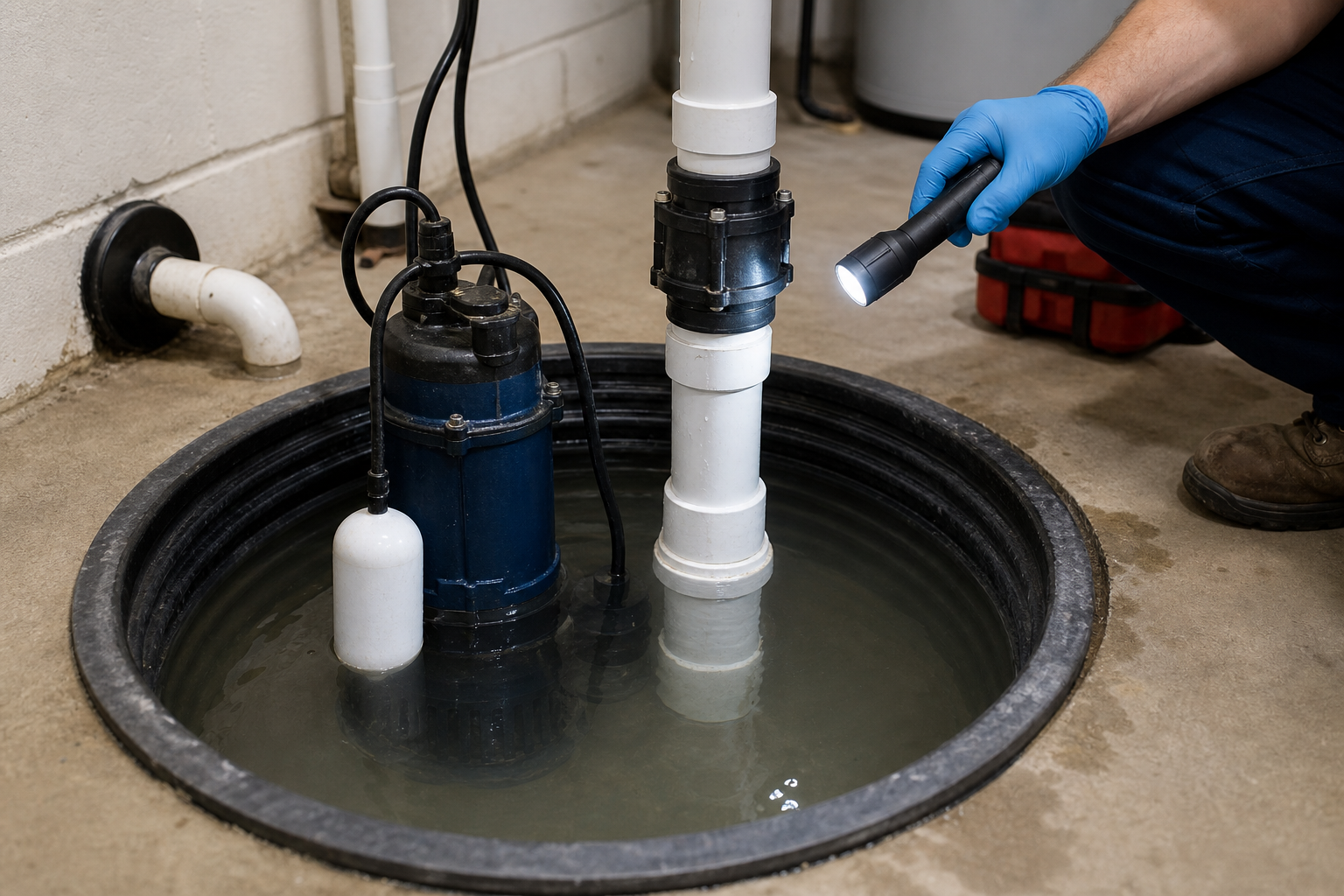
A sump pump that runs without lowering the water level is not working properly. The motor sound only confirms that part of the pump is energized; it does not prove that water is entering the intake, moving through the impeller, passing the check valve, or leaving through the discharge pipe. If the basin is rising toward the rim, treat the problem as urgent because the pump may not protect the property from overflow.
Keep people and pets away from standing water near electrical equipment. Do not reach into the basin while the pump is connected to power. If water is close to overflowing, reduce water use in the home where practical and contact a plumber for diagnosis.
Confirm That the Water Level Is Not Dropping
Sump pumps can cycle quickly, and sound may travel through the discharge piping. From a dry, safe position, watch the basin for a short period. A working pump should lower the water level and then stop when the float reaches its shutoff point.
If the motor runs continuously while the level remains unchanged, the pump is not moving enough water. If the level drops very slowly, the discharge may be restricted or water may be flowing back into the basin after each cycle. Both conditions deserve attention before the next heavy inflow.
A Blocked Intake Can Starve the Pump
Water enters a submersible sump pump through openings near its base. Sediment, gravel, debris, or a shifted basin liner can block those openings. The motor may run, but the impeller cannot receive enough water to create useful flow.
Repeated intake blockage can also make the pump run hot and shorten its life. A plumber can disconnect power safely, remove the pump, inspect the intake, and determine whether debris is the only problem or whether the pump has been damaged.
The Float May Be Stuck in the Wrong Position
The float tells the pump when to start and stop. A tethered float can become trapped against the basin wall, discharge pipe, electrical cord, or another object. A vertical float can bind on its guide. The pump may then run even when its position does not match the actual water level.
Float trouble can create two different hazards: continuous operation that overheats the pump, or failure to start while the basin fills. Do not rearrange cords or reach into the water around an energized unit. A plumber can check the float’s full movement and verify the switch electrically.
Air Lock Can Prevent Water Movement
Air trapped in the pump or discharge path may stop the impeller from establishing flow. The motor spins, but the pump moves little or no water. Some installations use a small relief opening in the discharge piping to prevent this condition. If that opening is missing, misplaced, or clogged, air-lock problems can recur.
Drilling or modifying the discharge pipe without the manufacturer’s specifications can create leaks and damage. The safer approach is to have the installation checked against the pump requirements.
A Check Valve Can Stick or Be Installed Incorrectly
The check valve is intended to keep discharged water from falling back into the basin after the pump stops. A stuck valve can block outgoing water. A failed valve can allow the pump to move water upward only to have much of it return, making the unit cycle repeatedly without gaining ground.
Listen for a large rush of water returning after the motor stops and note whether the basin refills immediately. That observation can help a plumber narrow the diagnosis, but the valve and piping still need hands-on inspection.
The Discharge Pipe May Be Clogged, Frozen, or Damaged
The pump cannot empty the basin if the discharge route is blocked. Sediment, debris, a crushed pipe, a closed valve, a failed fitting, or an obstructed outlet can stop flow. In colder conditions, exposed sections may also freeze.
Never open a pressurized fitting or cut into the pipe while the pump is connected. Water can release suddenly, and an incorrect repair can send discharge back toward the foundation. A plumber can trace the route, check each accessible connection, and confirm that the outlet is open and directing water to an appropriate location.
The Impeller or Motor May Be Worn
The impeller is the rotating component that moves water. It can become jammed, loosened, broken, or worn down. A motor can also make noise without producing enough torque under load. Older pumps that have run through repeated blockages or long continuous cycles are more likely to have internal wear.
An inspection can distinguish a serviceable obstruction from a failing pump. Replacement may make more sense when the motor, switch, seal, or impeller is damaged, especially if the unit has a history of unreliable operation.
What a Plumber Checks
A professional diagnosis normally follows the water path from the basin to the discharge outlet. The plumber may verify:
- The basin water level and pump cycling behavior.
- Free movement and correct operation of the float switch.
- Intake condition and debris around the pump.
- Impeller movement and motor performance.
- Relief opening and signs of air lock.
- Check-valve direction and operation.
- Discharge-pipe restrictions, leaks, and outlet condition.
- Pump capacity compared with the lift and distance of the discharge route.
These checks identify whether cleaning, adjustment, valve or pipe repair, or pump replacement is the appropriate next step.
When to Request Sump Pump Repair
Arrange service promptly when the pump runs without lowering the water, cycles continuously, hums without starting, repeatedly trips power, gives off a burning smell, or allows the basin to rise unusually high. Active overflow, electrical arcing, or water near exposed electrical connections requires immediate caution and professional help.
Call to Action
If your sump pump runs but the water stays high, contact John’s Plumber for an inspection of the pump, float, check valve, and discharge path. A clear diagnosis can determine whether the system needs a focused repair or a dependable replacement before the basin overflows.