Not all leaks announce themselves with a dramatic burst or a puddle on the floor. The most destructive water leaks in Glendale homes are the ones you cannot see — slow drips behind walls, pinhole leaks under the slab, and weeping joints in crawl spaces that run for months before anyone notices. By the time visible damage appears, the hidden damage has already compounded.
Professional leak detection technology has advanced significantly, and a skilled Glendale plumber can now locate hidden leaks without tearing open walls or jackhammering floors. Here is how it works.
The Meter Test
The simplest first step is the water meter test. Turn off every fixture, appliance, and irrigation timer in the home, then watch the meter. If the flow indicator is still spinning, water is leaving the system somewhere. This confirms a leak exists but does not tell you where.
The plumber then isolates sections of the system — shutting off the hot water supply to determine if the leak is on the hot or cold side, closing isolation valves to narrow down which zone is affected. This systematic elimination process reduces the search area before any specialized equipment comes out.
Acoustic Leak Detection
Once the general zone is identified, acoustic listening devices amplify the sound of water escaping from a pressurized pipe. Even a small pinhole leak creates a detectable sound signature as water forces through the opening. The technician uses a combination of ground microphones and contact sensors to map the sound intensity across the suspected area, zeroing in on the point where the sound is loudest.
This technique is especially effective for slab leaks where the pipe is buried under concrete and visual inspection is impossible. The acoustic signature of a slab leak is distinct from ambient water noise, and an experienced technician can differentiate between a supply leak and normal drain flow.
Thermal Imaging
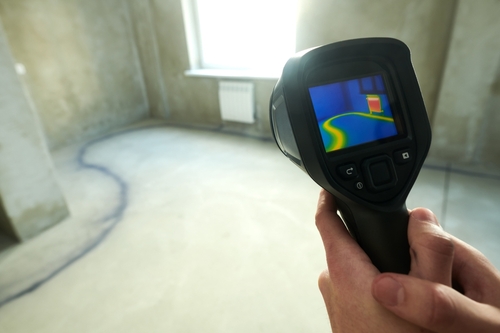
Infrared thermal cameras detect temperature variations on surfaces that indicate moisture behind walls or under floors. A hot water supply leak beneath a slab creates a warm spot on the floor surface. A cold water leak behind a wall shows as a cooler zone compared to the surrounding dry wall area.
Thermal imaging is non-invasive and gives the plumber a visual map of moisture patterns without opening anything. Combined with acoustic data, it provides a highly accurate location estimate.
Pressure Testing
Static pressure testing involves pressurizing a section of the plumbing system to a set level and monitoring whether the pressure holds or drops. A steady pressure drop confirms a leak in that section. This method is particularly useful for confirming leaks in supply lines that are not actively flowing, such as systems in unoccupied rental properties or second homes.
What Happens After Detection
Once the leak is located, the plumber will explain your repair options. For accessible leaks in walls or ceilings, a targeted section repair is usually straightforward. For slab leaks, options include spot repair through the slab, rerouting the line above ground, or — if multiple leaks suggest systemic pipe failure — a full repipe.
The key advantage of professional detection is precision. Knowing exactly where the leak is before cutting into anything means less demolition, less repair cost, and less disruption to your home. Exploratory cutting is the old way — modern detection is faster, cheaper, and less destructive.
When to Call
If your Glendale water bill has increased without explanation, if you hear water running when everything is off, if you notice warm or damp spots on floors or walls, or if your water heater seems to run constantly, schedule a professional leak detection before the hidden damage becomes visible damage. It costs a fraction of what the repairs will cost if you wait.