Quick Answer: To change the flush valve on a toilet easily, shut off the stop valve / shutoff valve, flush and drain the toilet tank, disconnect the braided connector / supply line at the inlet fitting, and remove the toilet tank from the toilet bowl if needed. Then unhook the chain from the trip lever / tank lever, remove the old flush valve/toilet flush valve by loosening the large locknut / large nut / jam nut, install the new flush valve assembly with the rubber gasket / sponge gasket seated inside the tank, and replace the tank-to-bowl gasket and tank bolts / hold-down bolts before reassembling. Reconnect the refill tube to the overflow tube, turn water on, and leak-test with tissue and a quick dye check. Most DIY swaps take 45–90 minutes when bolts cooperate. A running toilet is one of the easiest ways to waste water quietly, and the fix is often more “parts + patience” than technical skill. Done right, you’ll stop seepage between tank and bowl, eliminate ghost refills, and get a stronger flush again.
Common Signs You Need a New Flush Valve
If your toilet runs, ghost-flushes, or leaks between tank and bowl, the flush valve seal is usually failing.
You may need to replace flush valve parts when you notice:
- The tank refills randomly (ghost flushes)
- The bowl gets tinted during a dye test without flushing
- Water seeps at the tank-to-bowl seam
- The flapper won’t seal or keeps warping
- Your toilet flush valve old style flapper has hardened and won’t flex
If you’re also dealing with other fixtures around the house, it’s a good time to bundle quick DIY wins like fix a faucet handle that leaks so you’re not chasing multiple small water-wasters.
Parts of a Toilet Flush System (So You Know What You’re Touching)
The flush valve controls the dump of water from the tank to the bowl, and the flapper/canister is the seal that stops it.
Inside the toilet tank, you’ll see:
- Flush valve / toilet flush valve / flush valve assembly (main outlet at bottom)
- Seal type: flapper or canister or flush tower / tower mechanism
- Overflow tube (prevents overfill)
- Trip lever / tank lever (handle mechanism)
- Chain (connects lever to flapper/canister)
- Fill valve (refills tank after flush) + refill tube (feeds bowl via overflow)
Tip: If your fill valve hisses, short-cycles, or looks crusty, swapping the fill valve at the same time saves you from taking the tank off twice.
Tools and Supplies You’ll Actually Use
Having the right tools prevents cracked porcelain and stripped hardware.
Here’s the realistic kit list:
- Adjustable wrench
- Small socket set (optional but helpful)
- Flathead screwdriver
- Pliers / locking pliers
- Sponge + bucket
- Towels
- Penetrating oil
- Mini hacksaw (only if bolts are hopeless)
- Masking tape (to protect glazed surfaces if you have to cut bolts)
How to Measure Flush Valve Size
Measure the diameter of the flush valve opening most are 2-inch or 3-inch and buy the exact match.
This step prevents the #1 DIY failure: buying the wrong size kit.
Quick Measuring Methods
You can measure the opening directly or compare the flapper size.
- If you can access the opening after removing the old part, measure the flush valve opening diameter.
- As a rough visual: a 2-inch looks closer to a baseball; a 3-inch looks closer to a softball.
This is exactly what “flush valve size toilet” searches are trying to solve getting the size right before you open packages.
Choose the Right Replacement (Match Size + Style)
Match both the size (2-inch/3-inch) and mechanism style (flapper/canister/tower) so the chain and lever geometry stays correct.
Toilets usually use:
- 2-inch flush valve (common in older/standard models)
- 3-inch flush valve (common in many newer or high-efficiency toilet (HET) designs)
Style options:
- Flapper style
- Canister style
- Tower style (flush tower)
Tip: “Exact match replacement” isn’t marketing, it’s how you avoid leaks, weak flushes, and annoying chain snagging.
If you’re upgrading bathrooms or replacing multiple pieces, keep choosing the right plumbing fixtures for home in mind so parts compatibility and maintenance stay simple long-term.
Step-by-Step: How To Change the Flush Valve on a Toilet
Shut off water, drain tank, remove tank if needed, swap valve and seals, then reassemble and leak-test.
Below is your full DIY walkthrough.
Step 1 – Shut Off Water and Verify It’s Off
Close the stop valve / shutoff valve and confirm the tank stops refilling.
Turn the valve clockwise until it stops. Remove the tank lid and watch no refill stream should enter.
Step 2 – Drain the Tank Completely
Flush and hold the lever down, then remove remaining water with a sponge.
- Flush once and hold the handle down to evacuate most water
- Use a sponge to soak the last inch into a bucket
- Disconnect the refill tube from the overflow tube so it doesn’t snag later
This “fully drained tank” step makes the rest of the job cleaner and reduces surprise spills.
Step 3 – Disconnect the Supply Line Safely
Disconnect the braided connector / supply line at the tank’s inlet fitting without stressing parts.
Place a towel under the connection. Loosen carefully. If the connector is old or kinked, replace it to avoid future leaks.
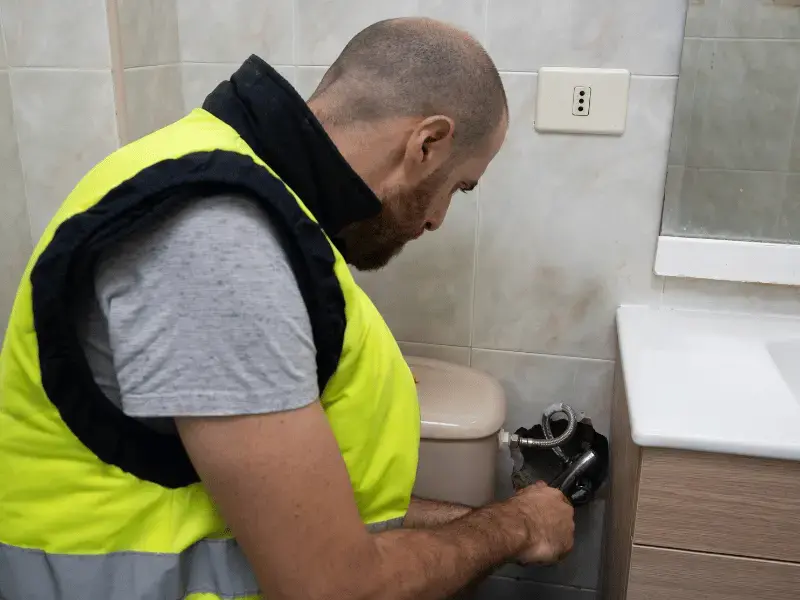
Step 4 – Remove the Toilet Tank (When Required)
Most flush valve swaps require lifting the toilet tank off the toilet bowl.
Inside the tank you’ll see rubber-gasketed bolts and below you’ll see nuts beneath (tank bolt nuts).
- Hold bolt heads steady (a flathead screwdriver helps)
- Loosen nuts evenly using an adjustable wrench or small socket set
- If hardware is frozen, apply penetrating oil and wait a few minutes
- If bolts absolutely won’t move, use a mini hacksaw (protect porcelain with masking tape)
Lift the tank straight up and set it on towels.
Quick fix if bolts are stuck: Penetrating oil + gentle back-and-forth often frees them without forcing. If you have to force, you risk cracking porcelain.
Step 5 – Remove the Old Flush Valve Assembly
Unhook the chain, remove the seal mechanism, then loosen the locknut under the tank.
- Unclip the chain from the trip lever / tank lever
- Remove the flapper / canister / flush tower / tower mechanism
- Under the tank, loosen the large locknut / large nut / jam nut
- Pull the old valve out through the tank opening
You’ll likely remove the valve body and overflow tube as one unit, depending on design.
Step 6 – Clean the Sealing Surface Before Installing the New Valve
A clean seat prevents leaks and any grit under the gasket can cause weeping.
Wipe the porcelain opening and area where the gasket sits. Even a small grain of debris can create a slow leak later.
Step 7 – Install the New Flush Valve and Gasket Correctly
The rubber gasket goes inside the tank; the locknut tightens from below.
- Fit the rubber gasket / sponge gasket inside the tank under the valve flange
- Insert the new flush valve through the hole
- Thread the large locknut / large nut / jam nut from underneath
- Tighten hand-tight plus a gentle additional turn (do not over-tighten)
Over-tightening is how DIYers crack porcelain or warp seals.
Step 8 – Replace Tank-to-Bowl Gasket and Bolts (Don’t Reuse Old Rubber)
New rubber seals prevent tank-to-bowl leaks old rubber often compresses unevenly.
Install:
- New tank-to-bowl gasket
- New tank bolts / hold-down bolts (and washers)
- Ensure flat washer positioning matches instructions
- If provided, install rubber washer properly (rubber against porcelain)
Tighten evenly side-to-side until the tank is stable. You’re compressing rubber, not crushing porcelain.
Step 9 – Reconnect Supply, Set Water Level, and Reconnect Refill Tube
Reconnect the supply line, then reconnect refill tube to overflow tube and set fill level.
- Reconnect the braided connector / supply line at the inlet fitting
- Open the stop valve / shutoff valve slowly
- Reattach the refill tube into the overflow tube
- Adjust the fill level per the marked waterline inside the tank
If your fill valve is old, now is the easiest time to swap it.
Step 10 – Tune the Chain and Test Flush Performance
Proper chain slack prevents weak flushes and running.
Connect the chain to the lever with about 1/4 inch of slack so the flapper fully closes.
Leak Check Like a Pro (2-Minute Test)
Use tissue and dye to confirm the seal this catches slow leaks before they become water bills.
Use this quick numbered test:
- Lay dry tissue around bolts, tank seam, and supply connection
- Flush 2–3 times and check for any damp spots
- Add a few drops of food dye to the tank and wait 5 minutes
- If dye appears in the bowl without flushing, the seal isn’t perfect reseat and retest
This simple test catches “invisible running” that homeowners miss for months.
Troubleshooting After Installation
Most post-install issues come from wrong size, chain tension, or a gasket that isn’t centered.
Here are common symptoms and what they mean:
| Problem | Likely Cause | Fix |
| Toilet keeps running | Chain too tight or seal not seated | Add slack, reseat flapper/canister |
| Weak flush | Wrong valve size or low waterline | Confirm size, adjust fill level |
| Drip at tank-to-bowl seam | Gasket off-center or bolts uneven | Recenter gasket, tighten evenly |
| Water at supply connection | Loose fitting or old connector | Snug gently, replace connector |
If you’re stuck and water is still weeping after reseating, reliable fixture repair technicians can stop the guesswork and prevent cracked tanks from over-tightening.
Special Cases (Old Toilets, Wall Tanks, and Commercial Mentions)
Some setups change the steps, especially wall tanks and older designs.
- toilet flush valve old style: Older flappers may use uncommon shapes; matching brand/style matters.
- Wall-mounted tanks: Some designs allow access without fully separating the tank from bowl (depends on model).
- urinal flush valve replacement: This is a different type of flush mechanism (often a flushometer) and not the same as a tank-style toilet valve don’t buy toilet tank parts for a urinal setup.
Quick Fixes if You Can’t Replace the Flush Valve Today
You can sometimes reduce running by adjusting chain slack or cleaning the seat, but it’s a temporary band-aid.
If you can’t do the full swap today:
- Clean the flapper seat area
- Give the chain a bit more slack
- Confirm the waterline is below the top of the overflow tube
- Check that the flapper isn’t snagging on the overflow tube
These steps can reduce water waste until you can replace the full assembly.
If water is rising, leaking fast, or you’re worried about damage, the best plumbing company can handle the replacement cleanly especially if bolts are seized or porcelain is fragile.
When to Call for Help (Before You Crack the Tank)
Call a pro if bolts are fused, the shutoff won’t close, or leaks persist after reseating.
Situations that justify help:
- Shutoff valve won’t close fully
- Bolts spin or are rusted beyond removal
- You see hairline cracks in the tank
- Leak persists after correct reseating and sizing
- You need same-day stabilization (running toilet or active leak)
If it’s urgent overflow risk, active leak, or shutoff problems, emergency residential plumbing experts can prevent water damage and stop the waste fast.
Call John’s Plumbing & Drain Services
If your bolts are seized, the shutoff won’t close, or you want a no-leak install the first time, John’s Plumbing & Drain Services can help with toilet repairs, valve replacements, and full fixture troubleshooting.
Call now: 3234227485
Company: John’s Plumbing & Drain Services
FAQs About Replacing Flush Valve
How do I know if I need to replace the flush valve or just the flapper?
Replace the flapper if it’s warped but the valve body is fine; replace the flush valve assembly if the valve is cracked or the seal surface is damaged.
How long does it take to change a toilet flush valve?
Most DIY replacements take 45–90 minutes, longer if tank bolts are corroded.
Do I have to remove the entire toilet to change the flush valve?
No, usually only the tank is removed from the bowl, not the whole toilet.
Why does my toilet still run after replacing the flush valve?
Common causes are chain too tight, debris under the seal, fill level too high, or the wrong valve size.
Should I replace the fill valve at the same time?
Yes if it’s old, noisy, or short-cycling doing both while the tank is off saves time and avoids repeat work.