You asked, “what are the best ways to prevent plumbing leaks?” In Los Angeles, where aging pipes meet hard water and seismic activity, leak prevention is more than a maintenance chore—it’s financial self-defense. A single pinhole drip can waste up to 90 gallons of water a day, drive utility bills sky-high, and invite expensive mold remediation. Below, our licensed technicians at John’s Plumbing & Drain Services share six field-tested strategies you can start using right now to keep every drop exactly where it belongs: inside the pipes.
Why Small Leaks Become Big Problems in LA Homes
Southern California’s Mediterranean climate gives us plenty of sunshine, but it also places unique stress on residential and commercial plumbing. Seasonal temperature swings cause pipe materials to expand and contract. Hard, mineral-rich water accelerates corrosion. Older bungalows still rely on galvanized steel lines installed decades ago, while high-rise offices juggle complex fire-sprinkler systems. Add the occasional tremor from the San Andreas fault, and you have a recipe for sudden leaks that appear without warning.
According to recent municipal data, Los Angeles households lose an estimated 22 billion gallons of treated water annually to hidden leaks. The average repair bill for water damage in California now exceeds $7,000, with insurance deductibles trending upward. When you consider that proactive maintenance typically costs less than 10% of post-flood remediation, prevention clearly pays off.
At John’s Plumbing & Drain Services, we handle hundreds of emergency calls each month—everything from ruptured supply lines to slab leaks that undermine foundations. Our takeaway? Early intervention is the single most effective way to safeguard property value, occupant health, and your peace of mind.
What Are the Best Ways to Prevent Plumbing Leaks? Our Quick-Glance Table
| Pro Tip | Why It Works | How Often | DIY or Pro? |
|---|---|---|---|
| Annual Whole-Home Inspection | Finds hidden corrosion, loose fittings, and pressure issues before failure | Every 12 months | Professional (recommended) |
| Smart Leak Detectors & Shut-Off Valves | Senses moisture or flow anomalies and stops water automatically | 24/7 monitoring | Professional install, homeowner app monitoring |
| Pressure Regulation at 60–70 psi | Reduces stress on joints and appliance hoses | Check twice a year | DIY gauge check; pro adjustment |
| Water Heater Maintenance | Prevents tank corrosion and blow-outs | Flush every 6–12 months | DIY flush or pro service |
| Replace Aging Supply Lines | Stainless-steel braided hoses outlast rubber | Every 5–7 years | DIY or pro |
| Proactive Pipe Insulation | Prevents condensation and thermal stress | Inspect annually | DIY for exposed pipes; pro for walls/slab |
Watch This Helpful Video
To help you better understand what are the best ways to prevent plumbing leaks, we’ve included this informative video from John K. It provides valuable insights and visual demonstrations that complement the written content.
Now let’s dive deeper into each strategy, sharing insider techniques our crews use daily across greater Los Angeles.
The 6 Pro Tips in Depth
1. Schedule an Annual Whole-Home Plumbing Inspection
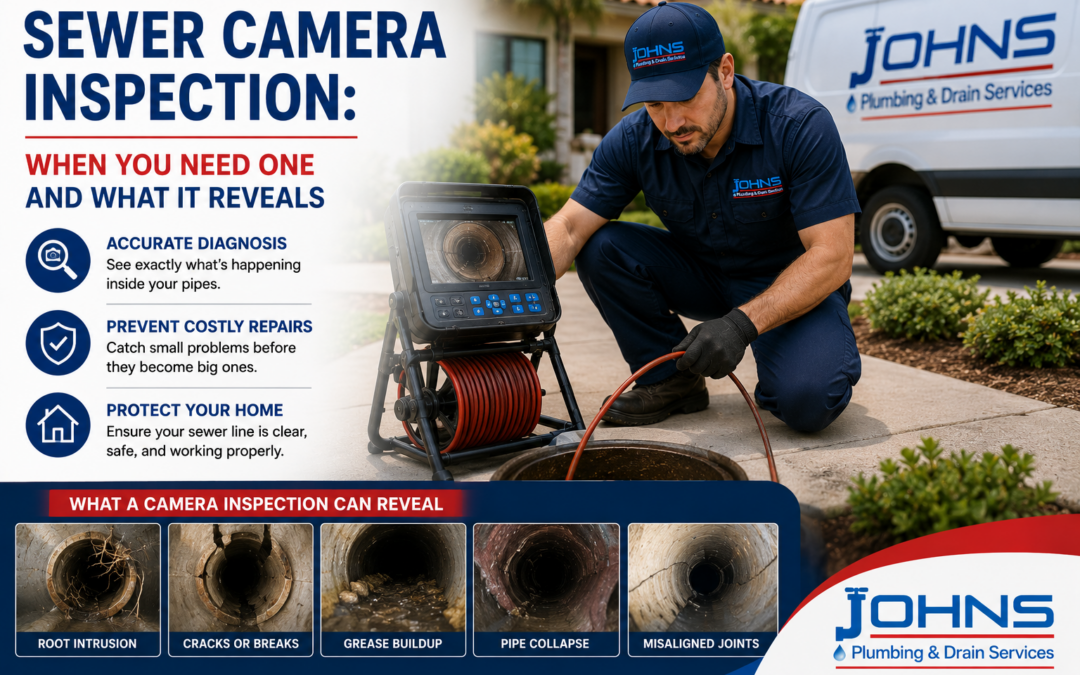
Think of a yearly plumbing check-up like a vehicle’s 30,000-mile service. Our master plumbers pressure-test supply lines, run thermal imaging to detect hidden moisture, snake video cameras through drains, and verify code compliance on fixtures installed by previous owners. We tag every shut-off valve for quick access during an emergency and document pipe material so you know whether you’re dealing with copper, PEX, or aging galvanized steel.
Homeowners often ask if an annual visit is overkill. Consider this: the Environmental Protection Agency estimates 10% of US homes have leaks that waste 90+ gallons per day. Catching a single toilet flapper or under-sink drip can recoup the inspection fee in water savings alone. In commercial properties, early detection protects inventory, data centers, and tenant relationships.
John’s Plumbing & Drain Services offers an Expert Warranty on all recommended repairs performed within 30 days of inspection. That means if the same component fails later, labor is covered. It’s one more reason our clients see routine inspections as an investment, not an expense.
2. Install Smart Leak Detectors and Automatic Shut-Off Valves
Imagine getting a phone alert at midnight because a sensor under your kitchen sink detected a 0.02-gpm trickle—and the water supply shut itself off. That’s exactly what cloud-connected leak detectors do. Devices such as Moen Flo or Phyn Plus learn your home’s baseline flow patterns, then close an electronic valve if they detect anomalies.
For LA customers who travel or manage multiple rental units, this technology is a game-changer. Insurance carriers now offer premium discounts up to 10% for homes with active leak detection. Our technicians handle the entire install: cutting in brass tees, calibrating the app, and registering devices for firmware updates. Typical installs take under two hours and cost far less than one slab-leak repair.
Pro tip within a pro tip: integrate leak detectors with your existing smart-home ecosystem (Alexa, Google HomeKit) to receive voice alerts or trigger cameras. John’s Plumbing helps configure these automations, ensuring you’re covered from hardware to software.
3. Regulate Water Pressure to 60–70 psi
Los Angeles Department of Water & Power supplies up to 150 psi in some hillside zones. While that ensures strong shower pressure, it also hammers washers, seals, and appliance hoses. Anything above 80 psi violates California plumbing code.
A $15 inline gauge attached to an exterior hose bib shows real-time pressure. If you’re reading above 70 psi, a licensed plumber should install or adjust a PRV on the main line. The job typically takes 90 minutes, and the brass valve lasts 15–20 years. In multi-story commercial buildings, we often stage PRVs on each floor to balance vertical pressure zones.
Here’s a quick cost-benefit snapshot:
| Scenario | Upfront Cost | Potential Savings | Payback Period |
|---|---|---|---|
| Install PRV + gauge | $350–$550 | Up to $200/yr in reduced leaks and utility bills | 2–3 years |
| Do nothing | $0 | Average $7,000 flood repair | n/a |
The math speaks for itself.
4. Maintain Your Water Heater Like a Pro
Water heaters, especially in hard-water counties like LA, accumulate mineral scale that acts like sandpaper on the tank’s glass lining. A breached liner results in a slow leak at best or a 40-gallon geyser at worst. The fix? Flush the tank every six to twelve months.
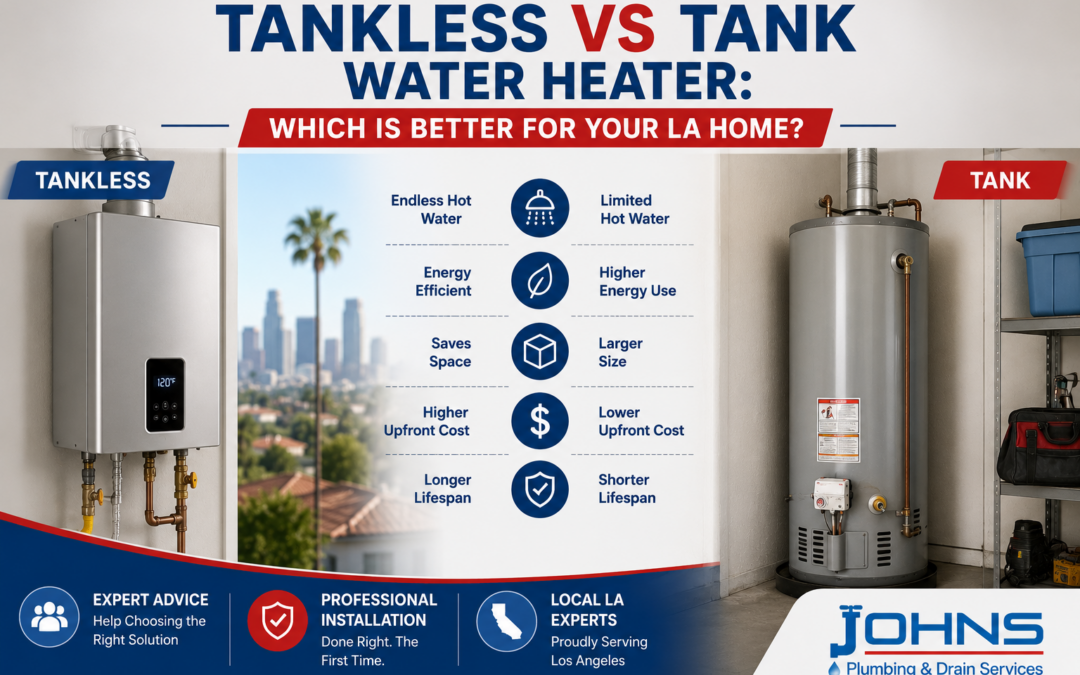
If you’re comfortable turning off gas/electric supply and handling a garden hose, you can DIY. Otherwise, our crew performs a full service: sediment flush, anode-rod inspection, thermostat calibration, and T&P valve test. For tankless units, we descale the heat exchanger with food-grade vinegar, extending service life up to 20 years.
Bonus insight: California’s Title 24 energy code now allows smart thermostats on heaters to reduce standby losses. John’s Plumbing offers retrofit packages that combine preventive maintenance with energy savings, giving you two wins for one appointment.
5. Replace Rubber Supply Lines with Stainless-Steel Braided Hoses
The weakest link in most plumbing systems isn’t the pipe—it’s the flexible hose that connects your faucet, toilet, or washing machine. Standard rubber hoses degrade from heat and chlorine. Nationwide insurance data shows washing-machine hose failures cause an average of $5,300 in damage per incident.
Switching to stainless-steel braided hoses rated at 1,500 psi costs about $12 each and takes five minutes with a crescent wrench. During routine service calls, our techs automatically upgrade any hose older than five years. For commercial kitchens, we spec NSF-certified lines with anti-microbial PVC cores that meet health-department standards.
Pro tip: date each hose with a Sharpie when installed. That simple step eliminates guesswork later and keeps your replacement cycle on track.
6. Insulate and Secure Vulnerable Pipes
Even in sunny LA, attic and crawlspace temperatures can swing from 45°F in winter nights to 130°F in summer afternoons. Thermal fluctuation creates condensation that corrodes pipes from the outside in. Meanwhile, seismic vibrations loosen hangers, causing pipes to rub against studs and wear through.
Closed-cell foam sleeves cost roughly $1 per foot and install easily on exposed PEX or copper. For slab or wall lines, John’s Plumbing uses UL-listed spray-foam insulation injected through small access ports—a minimally invasive process that pays dividends in energy savings and leak prevention.
While insulating, we also add earthquake-rated pipe straps every six feet horizontally and every eight feet vertically, per California Residential Code. Securing lines today can mean the difference between a harmless tremor and a catastrophic rupture tomorrow.
How John’s Plumbing & Drain Services Keeps LA Dry 24/7
The strategies above work best when combined with professional oversight. With over a decade of serving Los Angeles, John’s Plumbing & Drain Services has refined a rapid-response model built on three pillars: speed, expertise, and value.
- 24/7 Emergency Dispatch: Our live operators answer within four rings—no voicemail labyrinth. Crews arrive in fully stocked vans within 60 minutes for most metro ZIP codes.
- Certified Technicians: Every plumber holds a California C-36 license and undergoes biannual manufacturer training on the latest leak-detection tech.
- Transparent Pricing: Flat-rate quotes ensure no surprises. Seniors, veterans, and first responders receive 10% discounts.
- Comprehensive Warranties: We back labor with a written one-year guarantee and honor manufacturer warranties on parts, giving you double coverage.
Whether you manage a downtown restaurant or own a hillside bungalow, our team tailors solutions to your property’s unique risks. Need after-hours pipe repair without shutting down business? We deploy acoustic leak pinpointing and epoxy-lining techniques that fix problems from the inside, often in a single night shift. Facing repeated slab leaks? We design PEX reroutes that bypass concrete altogether, restoring water in days instead of weeks.
Above all, we operate with a prevention-first mindset. Every service call ends with a complimentary mini-inspection: checking water pressure, verifying shut-off functionality, and scanning for early warning signs. It’s how we translate emergency experience into long-term protection for our clients.
Conclusion
Plumbing leaks rarely announce themselves politely—they erupt at 3 a.m., soak drywall, and leave you scrambling for towels. By implementing the six expert tips above—annual inspections, smart leak detectors, pressure regulation, diligent water-heater care, upgraded supply lines, and strategic insulation—you dramatically reduce the odds of such chaos. More importantly, you safeguard your property, finances, and daily routine from unnecessary disruption.
At John’s Plumbing & Drain Services, we combine 24/7 availability with more than ten years of local expertise to turn preventive measures into everyday practice. Now that you know what are the best ways to prevent plumbing leaks, you’re equipped to act before small drips morph into big repairs. Stay proactive, stay informed, and keep Los Angeles’ precious water exactly where it belongs—flowing safely through well-maintained pipes.
Ready to Choose the Best what are the best ways to prevent plumbing leaks Solution?
At John’s Plumbing & Drain Services, we’re experts in what are the best ways to prevent plumbing leaks. We help businesses overcome customers frequently face sudden plumbing emergencies, leaks, and potential water damage, needing reliable and affordable solutions at any time. through the company provides emergency services around the clock, offering expert teams with quick and cost-effective plumbing repairs and installations to resolve issues promptly.. Ready to take the next step?