Los Angeles is full of beautiful mid-century homes with original hardwood floors, built-in bookshelves, and one feature nobody brags about — plumbing that has been slowly deteriorating for over half a century.
If your home was built before 1970, there is a very good chance it still has some combination of galvanized steel supply lines, cast iron drain pipes, and possibly even clay sewer laterals connecting to the city main. All three materials have a functional lifespan, and most of them have reached or exceeded it in homes across neighborhoods like Los Feliz, Highland Park, Eagle Rock, and Silverlake.
What Is Hiding Inside Your Walls
Galvanized steel pipes were the standard for residential water supply lines from the early 1900s through the late 1960s. They are steel pipes coated with a layer of zinc to resist corrosion. The problem is that the zinc coating eventually wears away, and once it does, the steel underneath corrodes from the inside out. That corrosion builds up as rust scale that narrows the pipe diameter, reducing water pressure and eventually causing leaks or full failures.
Cast iron drain pipes have a similar story. Cast iron was the go-to material for drain, waste, and vent lines in Los Angeles homes for decades. It is incredibly durable, but it is not immortal. After 50 to 80 years, cast iron can develop heavy internal corrosion, pitting, and eventually cracks or holes that allow sewer gases and wastewater to escape into your walls and foundation. The EPA recommends that homeowners test their water quality regularly, especially in homes with aging pipe materials.
The Warning Signs You Should Not Ignore
Low water pressure in multiple fixtures at the same time usually points to corroded supply lines rather than a single clog. Discolored water — especially a brown or rusty tint when you first turn on a faucet — is another telltale sign of internal pipe corrosion.
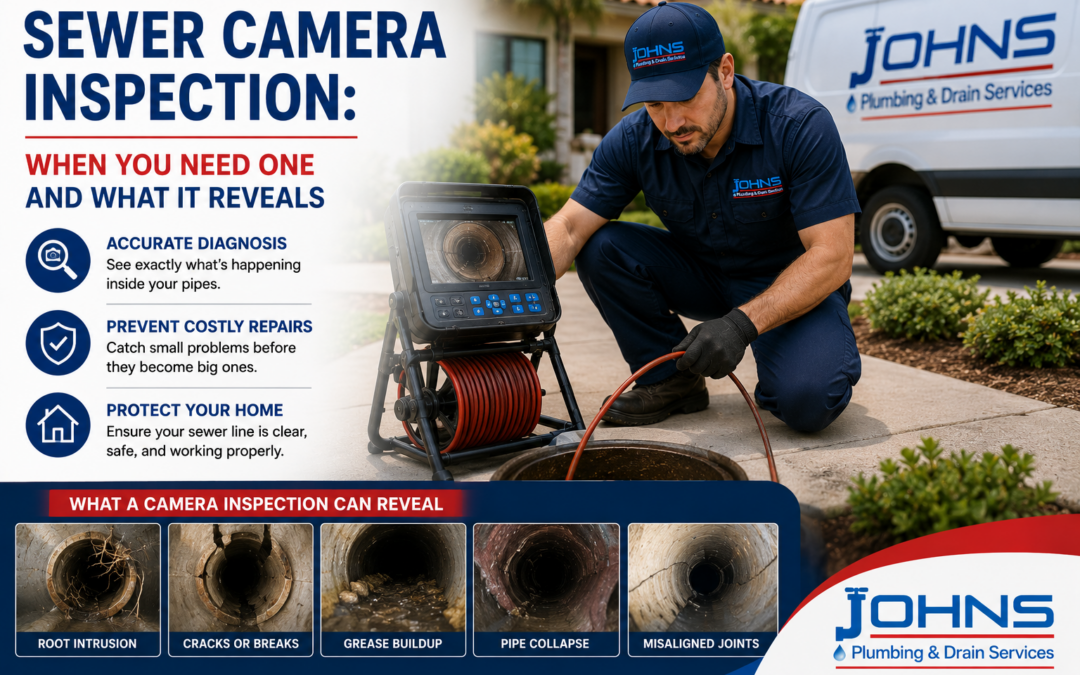
Frequent small leaks in different areas of the house suggest systemic deterioration rather than isolated damage. And if you notice damp spots on your foundation, unexplained increases in your water bill, or a faint sewage smell inside the home, you may be dealing with a drain line failure that a sewer camera inspection can pinpoint.
What a Professional Plumbing Inspection Covers
A thorough plumbing inspection for an older Los Angeles home should include a visual check of all accessible supply and drain lines, water pressure testing at multiple fixtures, a water heater evaluation, and ideally a camera inspection of the main sewer lateral. The camera work is especially important because it reveals root intrusion, bellied pipe sections, and cracks that you would never find from above ground.
The inspection results give you a clear picture of what needs attention now versus what can wait. Sometimes the answer is a targeted repair on a specific section, and sometimes the most cost-effective long-term solution is a full repiping of the home.
The Cost of Doing Nothing
Ignoring old plumbing does not save money — it delays the expense while the damage compounds. A slow pinhole leak behind a wall can destroy drywall, insulation, and subfloor for months before anyone notices. A corroded sewer lateral can contaminate soil around your foundation and attract root growth that accelerates the collapse. And when a 55-year-old galvanized line finally gives out, it rarely picks a convenient time to do it.
Los Angeles homes built before 1970 have plenty of charm and character worth preserving. The plumbing is not part of that charm. A professional inspection gives you the information you need to protect your investment and avoid the kind of surprise that turns a Tuesday night into a plumbing emergency.