That constant hissing sound from the bathroom. The toilet that cycles on and off by itself every few minutes. The water bill that slowly creeps up with no explanation. A running toilet is one of the most common plumbing problems in Burbank homes, and one of the most expensive to ignore. A single running toilet can waste 200 gallons of water per day or more, depending on the severity.
The good news is that most running toilets are caused by one of three internal components, and some fixes are within reach for a handy homeowner. The bad news is that the wrong diagnosis leads to the wrong repair, and the toilet keeps running.
Cause 1: Worn Flapper
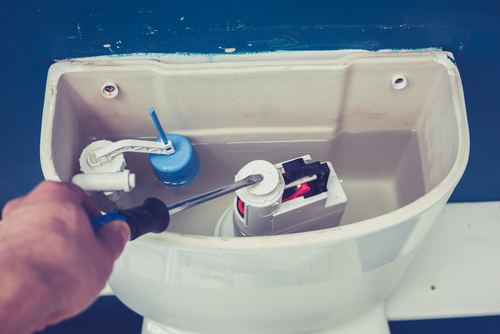
The flapper is the rubber seal at the bottom of the tank that lifts when you flush and closes to let the tank refill. Over time, the rubber deteriorates, warps, or collects mineral deposits that prevent it from sealing fully. When the flapper does not seal, water continuously leaks from the tank into the bowl, and the fill valve keeps running to compensate.
This is the simplest fix — a new flapper costs a few dollars at any hardware store and snaps into place without tools. However, not all flappers are universal. Bring the old one with you to match the size and style, or note the toilet manufacturer and model number.
Cause 2: Faulty Fill Valve
The fill valve controls the water flowing into the tank after a flush. When it malfunctions, it may run continuously, cycle on and off at random intervals (phantom flushing), or fail to shut off at the correct water level. Fill valves wear out over time, and the mineral content in Burbank’s water supply accelerates that process.
Replacing a fill valve is a moderate DIY project that requires shutting off the water supply to the toilet, draining the tank, and swapping the old valve assembly for a new one. Universal fill valves are available at hardware stores, but if you are uncomfortable working with water supply connections, a Burbank plumber can handle it quickly.
Cause 3: Improper Float Adjustment
The float mechanism tells the fill valve when the tank has reached the correct water level. If the float is set too high, water rises above the overflow tube and drains continuously into the bowl. Adjusting the float downward so the water level sits about one inch below the top of the overflow tube usually resolves this issue.
On modern fill valves, the float adjustment is typically a screw or clip on the valve body. On older ball-and-arm float assemblies, bending the arm downward lowers the water level. The EPA WaterSense program recommends that homeowners check toilet components annually, as running toilets are one of the largest sources of residential water waste nationwide.
When to Call a Plumber
Call a professional when you have replaced the flapper, checked the fill valve, and adjusted the float and the toilet still runs. Also call when you notice water on the floor around the base of the toilet — that is a wax ring failure, not an internal component issue, and it requires removing the entire toilet to replace the seal.
If the toilet rocks when you sit on it, the mounting bolts or the flange may be compromised. A rocking toilet will eventually break its wax seal and leak sewage onto your floor. This is a plumber job, not a tighten-the-bolts-and-hope job.
For homes with toilets that are 20 or more years old, sometimes the most cost-effective decision is replacing the entire unit with a modern low-flow model. Current residential plumbing standards in California require toilets that use 1.28 gallons per flush or less, compared to the 3.5 to 5 gallons older models consumed. The water savings alone pay for the new toilet within a year or two.
A running toilet might seem minor, but in a state where every gallon matters, fixing it is one of the simplest wins for your wallet and your Burbank home’s plumbing health.