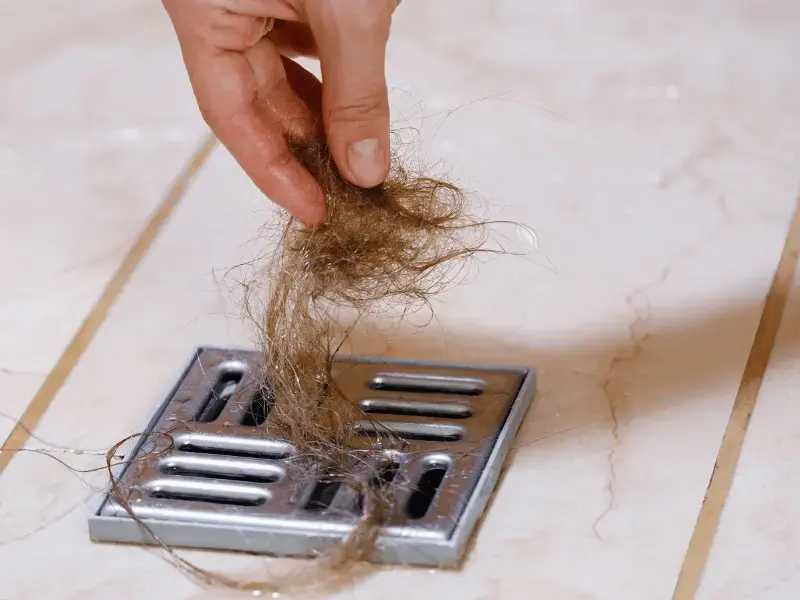
Quick Answer: To get hair out of the drain without damaging pipes, remove the drain cover or drain stopper, pull hair with a hair removal tool (or drain snake), then flush with hot water and a safe cleaner. Avoid harsh chemical drain cleaner products and aggressive force that can crack parts. If your shower drain or bathtub drain keeps clogging, treat it as buildup (like soap scum + hard water + hair) and fix both the hair and the residue. Most clogs clear in 10–20 minutes with the right method. If multiple fixtures back up, stop and investigate the main line. Hair clogs are gross, but the real risk is how people try to clear them by scratching a tub drain, loosening a drain assembly, or softening a PVC pipe with heat. The goal is a clean extraction plus a residue reset, so the hair doesn’t immediately re-form a clog.
What to Use to Get Hair Out of Drain
The safest approach is a simple combo: a grabber tool + gentle flushing + a residue-reducing cleaner.
In most homes, hair clogs build faster because mineral buildup from hard water and sticky shampoo residue / soap scum give strands something to latch onto. If you want DIY methods to unclog drains easily, focus on removing the hair mechanically first then cleaning what hair sticks to.
You’ll get the best results when you choose the right “grab” tool for your drain type (tub vs sink) and avoid anything that warps plastic or corrodes metal.
Fast Tool Picks (Match the Drain)
Use a grabber-style tool for shallow clogs; use a snake/auger for deeper clogs.
| Drain Situation | Best Choice | Why it Works | Caution |
| Hair visible near top | Hair removal tool / hair catcher pull | Grabs strands quickly | Pull slowly don’t yank |
| Clog a few inches down | Drain snake / plumber’s snake | Hooks hair mass | Twist gently to avoid scratches |
| Deep, stubborn clog | Drain auger / power drum auger | Reaches farther | Use low force; stop if it binds |
| Flat tub/shower surface | Cup plunger | Can dislodge soft clogs | Seal well; don’t overdo pressure |
Why Hair Clogs Form So Fast (It’s Not Just Hair)
Hair clogs form when wet hair binds with sticky residue like soap scum, grease, oils, and organic buildup.
Hair alone can slip through, but it becomes a problem when it tangles into a hair mass / hair ball accumulation and collects everything else. Common “glue” inside drain pipes includes:
- Soap scum from bar soap and body wash
- Shampoo residue and conditioners
- Grease (especially if it’s a combo bath + utility sink scenario)
- Shaving foam (often creates dense clumps)
- Mineral buildup from hard water that makes surfaces tacky
Even short hair can clog drains think moustache/trim hair mixed with thick foam and residue.
Warning Signs You Should Act Today
If water drains slowly, pools, smells, or you notice gurgling drains, hair is likely catching in residue and building a blockage.
Look for these early indicators (especially in getting hair out of tub drain scenarios where the line is shallow and catches more debris):
- Drain taking longer than ~10 seconds to clear after the water stops running
- Standing water at your feet in the shower
- Gurgling sounds (air struggling past a partial clog)
- Musty or sewer-ish odor from the drain opening
If you’re seeing this repeatedly, you’re not only dealing with hair out of drain , you’re dealing with a residue problem that keeps trapping new strands.
Safety Checklist Before You Start
Protect the finish, avoid heat extremes, and don’t mix chemicals, this is how you avoid pipe and fixture damage.
- Lay a towel down to protect the tub finish and catch drips
- Use gloves; hair clogs can be loaded with bacteria
- Keep a bucket nearby for extracted debris
- Never mix cleaners (especially bleach + anything unknown)
- If you have PVC pipe, do not use extreme heat
This is also the moment to decide whether the clog is local (one drain) or system-wide (multiple drains backing up).
Step-by-Step: How to Get Hair Out of the Drain Safely
Remove the cover, pull the hair out gently, then flush and reset the residue so the clog doesn’t return.
Step 1 – Remove the Drain Cover or Stopper
Take off the drain cover or drain stopper carefully so you don’t bend parts.
Some tubs use screws; some twist off. If it’s stubborn, use needle-nose pliers carefully (don’t gouge the chrome).
Step 2 – Manually Extract the Clog (Best First Move)
Pull hair out mechanically before you pour anything down the line.
Use a hair removal tool first. If you don’t have one, a straightened wire hanger with a small hook can work, but it’s easier to scratch surfaces slowly.
Step 3 – Snake the Drain (Gentle Technique)
A drain snake works best when you insert slowly and twist lightly.
Use a basic plumber’s snake for most bathroom clogs. For deeper clogs, a drain auger or power drum auger is stronger, just don’t force it. If your tool has a drill drive connector, keep the torque low and stop if it catches hard (binding can damage the drain assembly).
Step 4 – Flush with Hot Water + Mild Degreaser
Hot water helps wash loose residue after extraction.
Run hot tap water first. If you want a boost, add a small amount of dish detergent to help loosen oily films and rinse.
Here’s a clean, simple numbered process you can follow:
- Remove cover/stopper and clear visible debris
- Pull hair with grabber tool (or hanger)
- Insert snake; twist and pull out remaining hair
- Flush with hot tap water + a small squeeze of dish soap
- Test flow for 30–60 seconds
This is the best way to clean hair out of a drain without relying on harsh chemicals.
Home Remedies for Drains Clogged With Hair (When They Help)
Home remedies help most after you physically remove hair. Think of them as “residue cleanup,” not a magic dissolver.
Many people search home remedies for drains clogged with hair and expect hair to dissolve instantly. In reality, most DIY mixes loosen the sticky residue that hair clings to, which is why they work best after the hair is mostly removed.
Baking Soda + Vinegar (light maintenance only)
Baking soda + white vinegar can loosen grime, but it’s usually weak on heavy hair clogs.
- Pour baking soda into the drain
- Add vinegar and let it fizz 15–20 minutes
- Flush with hot water
Boiling Water (use caution)
Boiling water can be risky for PVC pipe and some older connections.
If you’re unsure of your pipe material, skip boiling water and use hot tap water instead. Heat damage can cause softening, warping, or leaks later.
What NOT to Do (Common Mistakes That Damage Pipes)
Avoid harsh chemicals, excessive force, and heat extremes, these cause corrosion, warped plastic, and broken fittings.
The biggest pipe-damage mistakes come from trying to “melt” the clog:
- Overusing chemical drain cleaner products
- Leaving Drano or similar caustics in the line too long
- Repeatedly forcing an auger when it binds
- Pouring boiling water into unknown pipe materials
- Scraping aggressively with a hanger or tool
If you’re stuck after a couple careful attempts, don’t escalate force change strategy.
Best Tool to Get Hair Out of Drain (And When to Upgrade)
The best tool depends on clog depth grabber tools for shallow clogs, snake/auger for deeper clogs.
If you’re choosing one tool that solves most bathroom problems, a basic drain snake is the most versatile. Pair it with a drain hair catcher or drain trap cover to prevent future clogs (products like TubShroom are popular because they catch hair before it enters the line).
If this still isn’t working and you’re repeatedly getting hair out of the drain every week, you may have a deeper issue like buildup further down the line.
Quick Fixes for a Slow Drain (When You Need It Working Now)
A quick fix is mechanical removal + plunger suction + a warm flush fast, safe, and usually effective.
When you need to clear hair out of drain fast:
- Pull hair from the top with a grabber tool
- Use a cup plunger with a good seal (short controlled plunges)
- Flush with hot tap water and a bit of dish detergent
If you’re dealing with a tub drain that barely moves water, do the extraction step first—plunging alone often just compacts the hair deeper.
If you’ve tried these steps and the drain is still slow, a best drain cleaning specialist can confirm whether there’s deeper buildup, an offset connection, or a line condition issue without guessing.
Enzyme and Bacteria-Based Cleaners (Pipe-Safe Maintenance)
Enzyme cleaners are best for ongoing residue control and preventing re-clogs without harming pipes.
For prevention and gentle clean up, look for:
- Enzyme-based drain cleaner
- Bacteria-based drain cleaner
- Bio-enzyme cleaner
Some brands mentioned online include BioOne. These are designed to reduce organic buildup over time (think “slow and steady”), not instantly dissolve a heavy clog.
Use them as monthly maintenance after you’ve removed the main hair mass.
Bleach-When It’s Mentioned and When It’s a Bad Idea
Bleach can break down some organic gunk, but it’s not the safest default and should be used cautiously.
You’ll see bleach suggested as a shortcut. If you use it at all, keep it minimal, ventilate, wear protection, and never mix it with other products. Many homeowners do better using a bio/enzyme approach to avoid chemical stress on the plumbing.
If you’re uncertain, a reliable plumbing firm can help you choose a pipe-safe plan based on your home’s materials and drain layout especially in older LA properties where previous repairs may have mixed materials.
“Is It Really Just Hair?” How to Tell When It’s Bigger
If multiple drains back up, clogs return quickly, or gurgling spreads, the issue may extend beyond the fixture drain.
Use this quick diagnostic table:
| Symptom | Likely Cause | Best Next Step |
| Only one shower is slow | Local hair + residue | Snake + residue cleanup |
| Sink + shower both slow | Shared branch buildup | Deeper snake / auger |
| Toilet bubbles when shower runs | Venting/drainline restriction | Stop DIY; diagnose |
| Re-clogs in days | Residue + partial obstruction | Enzyme plan + inspection |
| Sewage smell + slow drains | Trap/line buildup | Clean trap area + investigate |
If you suspect a bigger issue, this is when 24/7 sewer camera technicians become relevant especially if backups happen at night or on weekends and you need clarity fast.
Prevention That Actually Works (So You Stop Fighting Hair Clogs)
Prevention is a hair-catcher + residue control + simple habits that reduce what builds up in the pipe.
Here’s one (and only one) bullet list of habits that prevent repeats:
- Use a hair catcher / drain trap cover and clean it after showers
- Brush hair before showering to reduce shedding
- Avoid dumping oily products down bathroom drains (grease, heavy oils)
- Reduce soap scum formation (liquid soap can help)
- Use an enzyme cleaner monthly to limit sticky residue
A small change here prevents the “hair monster” from rebuilding in your shower drain or bathtub drain.
Monthly Maintenance Routine (5 Minutes)
A monthly routine keeps residue low so hair can’t bind and form clogs.
- Remove and rinse the drain cover/stopper
- Pull any surface hair with a grabber tool
- Run hot water for 60 seconds
- Apply an enzyme/bacteria cleaner (per label)
- Rinse again the next day
This routine is especially helpful where hard water accelerates sticky buildup.
Call John’s Plumbing & Drain Services
If your drain keeps clogging, drains are backing up together, or you want the problem diagnosed instead of guessed, John’s Plumbing & Drain Services can help with drain clearing, inspections, and long-term fixes.
Call now: 3234227485
Company: John’s Plumbing & Drain Services
FAQs About Getting Hair Out of Drain
How do I get hair out of the drain without damaging pipes?
Pull hair mechanically first with a hair tool or snake, then flush with hot water and a gentle cleaner to avoid harsh chemicals and excessive force.
What is the safest way to unclog a shower drain full of hair?
Remove the cover, pull hair out, snake lightly, and flush this avoids corrosion and prevents damaging fittings.
Does baking soda and vinegar dissolve hair clogs?
Not reliably baking soda and vinegar help loosen grime, but hair usually needs to be physically removed first.
Can boiling water damage plumbing?
Yes boiling water can soften or warp some plastic piping and stress joints, so use hot tap water if you’re unsure.
What cleaner works best for preventing hair clogs?
Enzyme or bacteria-based cleaners work best for prevention because they reduce residue buildup without corroding pipes.