Quick Answer: Insulating outdoor water pipes reduces burst risk by slowing heat loss, preventing ice blockages, and limiting pressure buildup inside the pipe. Most winter pipe failures occur when trapped water freezes and hydraulic pressure rises in confined sections. Proper insulation, draft sealing, and pressure relief steps like controlled dripping help pipes survive cold snaps without cracking. Taking these steps early prevents hidden damage that often appears during thaw cycles.
What Causes Frozen Pipes to Burst
Frozen pipes burst primarily due to pressure buildup, not just ice expansion. When water reaches the freezing point (32°F / 0°C) inside a pipe, it can form an ice blockage that traps liquid water between two frozen points. As freezing continues, hydraulic pressure rises rapidly inside that confined space, leading to pressure burst pipes.
A critical concept often missed is the last water to freeze location. Pipes usually fail where liquid water remains longest while surrounding sections are already frozen. This is why bursts frequently occur in unexpected spots.
Another hidden danger is that a rupture initially sealed by ice may not leak right away. Flooding often begins during thawing, creating a major thaw cycle flooding risk.
Pipes Burst Temperature and Pressure Mechanics
Pipe burst risk increases sharply when temperatures drop near 20°F (-6.7°C), especially with airflow. While this is well below freezing, wind chill effect and moving air across pipe surfaces accelerate heat loss. Pipes in unheated or drafty areas cool faster than surrounding air.
Key physical factors involved:
- Volumetric expansion of water during freezing
- Excessive water pressure in confined sections
- No pressure relief path (open outlet)
Understanding how long below freezing for pipes to freeze helps to explain why insulation is so effective at preventing pressure buildup, since even a few continuous hours of subfreezing exposure can allow ice blockages to form inside unprotected lines.
Why Insulating Outdoor Water Pipes Works
Insulating outdoor water pipes works because it slows freezing long enough to prevent pressure from forming. Insulation does not heat pipes; it reduces heat loss / heat flow from the pipe to cold air, keeping pipe walls warmer for longer periods.
Benefits include:
- Delayed ice formation
- Reduced temperature fluctuation
- Lower chance of full ice blockage
- Protection against sudden temperature drops
This is especially important for exposed pipes, which cool faster than pipes embedded inside insulated walls.
Where Pipes Freeze First in Homes
Pipes freeze first where cold air can reach them directly or circulate freely.
High-risk areas include:
- Exterior walls
- Unconditioned spaces
- Attics
- Crawl spaces
- Basements
- Garages
- Outdoor faucets / hose bibs
- Pipe entry points
Cold air infiltration through cracks, cable penetrations, and gaps creates drafts / air leakage that accelerate freezing.
Common Freeze Locations and Risks
| Location | Why It Freezes | Primary Risk |
| Exterior wall pipes | Cold air exposure | Ice blockage |
| Crawl spaces | Moving air + low temps | Pressure burst |
| Attics | Wind-driven cold | Thaw-cycle leaks |
| Garages | Unheated environment | Split pipes |
| Hose bibs | Direct outdoor exposure | Sudden rupture |
How to Prevent Frozen Pipe from Bursting
Preventing a frozen pipe from bursting requires pressure control and insulation together.
Prevention Steps Before a Freeze
- Identify exposed pipes and vulnerable locations.
- Start insulating outdoor water pipes before temperatures drop.
- Seal gaps using weatherstripping / caulk.
- Allow faucets to drip slightly during extreme cold.
- Maintain indoor temperatures above 55°F.
- Know where the main water shutoff valve is located.
Quick Fix: If water slows to a trickle, leave the faucet open. Flowing water reduces internal pressure even if ice begins forming.
How to Insulate Outdoor Water Pipes
The goal is to reduce heat loss and prevent cold air contact.
Best Way to Insulate Outdoor Water Pipes
The best way to insulate outdoor water pipes is to use fitted insulation combined with air sealing.
Step-by-step Insulation Method
- Measure pipe diameter and length.
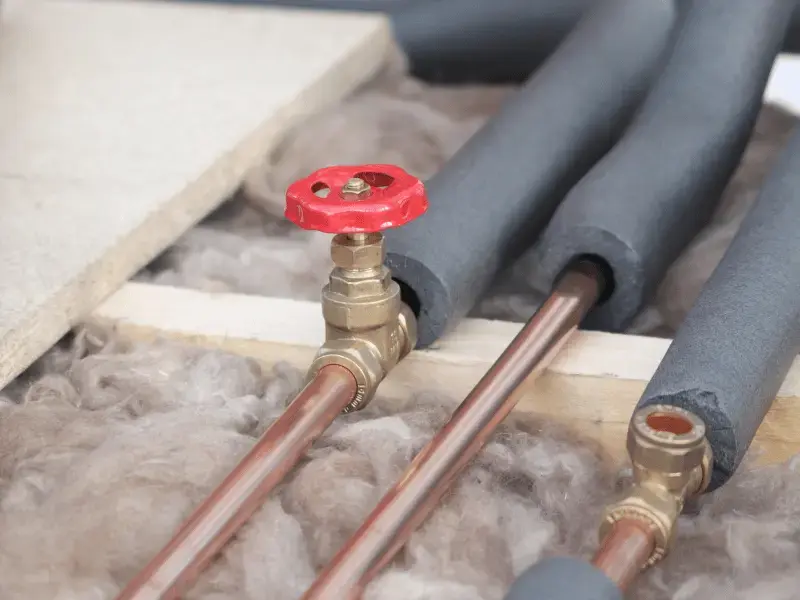
- Install foam pipe sleeves or insulation sleeves.
- Use fiberglass pipe wrap for irregular shapes.
- Ensure pipe seam orientation (seam face down).
- Secure using tape/fasteners (duct tape, foil tape, wire, cable ties).
- Add heat tape or heating cables only when necessary.
- Choose cables with a built-in thermostat (heat cable).
Insulation Material Comparison
| Material | Best Use | Notes |
| Foam sleeves | Straight runs | Easy install |
| Fiberglass wrap | Near heat sources | Wear gloves |
| Heat tape | Severe cold | Needs power |
| Faucet covers | Hose bibs | Prevents freezing |
Insulation for Water Pipes in Crawl Space
Crawl spaces are one of the most common freeze points. Even insulated pipes can freeze if cold air circulates freely. Combine insulation with air sealing and draft control.
Tip: Insulation alone is not enough, blocking airflow is equally important.
Pipe Material and Burst Risk
Different materials respond differently to cold.
Common residential pipe materials:
- Copper pipe
- PVC (polyvinyl chloride)
- Black iron pipe
A copper pipe burst is more likely in marginal conditions due to high heat conductivity. Plastic pipes resist heat flow better but still fail under pressure.
Pipe diameter plays little role in freeze prevention compared to insulation and airflow control.
If You Already have a Burst Frozen Water Pipe
A burst frozen water pipe often leaks only after thawing. Ice may temporarily seal the rupture. When temperatures rise, water flows through the damaged area. Immediate actions include:
- Shut off the main water shutoff valve
- Open faucets to relieve pressure
- Avoid open flames for thawing
- Inspect walls and ceilings for moisture
This is where knowing the immediate steps to take if a pipe burst can limit damage.
When Professional Inspection Makes Sense
Some plumbing layouts have hidden vulnerabilities. In these cases, working with a local plumbing company can help identify freeze-prone zones such as poorly sealed cavities, exterior-wall runs, or older installations before winter damage occurs.
Emergency Situations During Freeze-Thaw Cycles
Freeze-thaw cycles can cause sudden failures. When underground or pressurized lines rupture, access to 24/7 pipe bursting technicians becomes critical to stop water damage quickly.
For homeowners planning long-term solutions, understanding the benefits of pipe bursting helps explain why it’s used for severely damaged or inaccessible lines.
Call Johns Plumbing & Drain Services Before Winter Hits
Want your home winter-ready without guessing? Johns Plumbing & Drain Services can help you identify vulnerable lines, protect outdoor runs, and prevent costly freeze-and-thaw damage. Call John’s Plumbing & Drain Services at 3234227485 to schedule a winter plumbing check and reduce your burst-pipe risk before the next cold snap.
FAQs About Insulating Outdoor Water Pipes
Does insulation guarantee pipes won’t freeze?
No insulation slows freezing, but severe cold, wind, and long exposure can still freeze pipes if drafts and heat loss remain.
Why do pipes often burst when temperatures rise?
Because thawing removes the ice plug that was temporarily sealing a rupture, allowing water to flow through the damaged section.
Is dripping a faucet actually helpful?
Yes. A small drip can relieve pressure and keep water moving, which reduces the chance of a pressurized ice plug forming.
Where should I insulate first?
Start with exterior-wall runs, outdoor faucets, attic lines, and crawl-space plumbing especially where cold air can move across the pipe.
Can I thaw a frozen pipe with a torch?
No. Avoid open flames. Use safe heat sources (warm air, controlled space heat) and keep the faucet open for pressure relief.
How often should I check insulation?
At least seasonally and after storms or repairs look for gaps, wet insulation, missing tape, and exposed elbows/valves.