Quick Answer: When water rises in your shower after flushing the toilet, it almost always means there is a blockage in the shared drain line or main sewer lateral that connects both fixtures to the city sewer. The toilet flush pushes water into the clogged section, and because it cannot flow forward, it takes the path of least resistance and comes up through the lowest open drain, which is usually the shower. A professional plumber can diagnose the blockage location and clear it.
Few things are more unsettling than flushing the toilet and watching dirty water bubble up through your shower drain. It feels like something is seriously wrong with your plumbing, and honestly, it is. But the good news is that this problem has a very specific cause and a very clear fix once a professional gets involved.
How Your Drains Are Connected
Most people think of each fixture in their home as having its own separate drain system. In reality, every drain in your house connects to a shared network of branch lines that feed into one main sewer lateral running out to the city sewer. Your toilet, shower, bathroom sink, and bathtub in the same bathroom typically share a single branch line before it merges into the main.
When that shared branch line or the main sewer line develops a blockage, water cannot flow downstream as it should. Flushing the toilet sends a large volume of water into the system all at once. If the path forward is blocked, that water has to go somewhere, and it finds the nearest open drain at a lower elevation. In most bathrooms, the shower drain sits lower than the toilet outlet, making it the default escape route.
What Causes the Blockage
The most common culprits behind this type of cross-fixture backup are tree root intrusion, heavy grease or sludge buildup, and foreign objects that should never have been flushed. In older Los Angeles homes with clay or cast iron drain lines, roots from mature street trees can infiltrate the pipe through small cracks at joints and grow into dense masses that catch debris and progressively restrict flow. This issue is especially common in neighborhoods with established landscaping, from Glendale’s tree-lined streets to the older Burbank neighborhoods near Magnolia Park.
Grease buildup from kitchen drains can also migrate downstream and create restrictions in shared sections of the drain system. Even if you are careful about what goes down your kitchen sink, decades of accumulated residue inside aging pipes narrows the effective diameter and creates catch points for other debris.
Flushing anything other than toilet paper, including wipes labeled “flushable,” contributes to blockages in the branch lines and main lateral. These products do not break down the way toilet paper does and frequently catch on rough spots inside older pipes.
Why You Should Not Ignore It
A cross-fixture backup is not a minor inconvenience. It is an early warning that a full sewer backup is coming if the blockage is not addressed. A partial blockage that causes water to rise in the shower today can become a complete blockage that sends sewage through every low drain in your home tomorrow. The cost of cleaning up a full sewer backup is dramatically higher than the cost of clearing the blockage before it reaches that point.
How a Plumber Fixes It
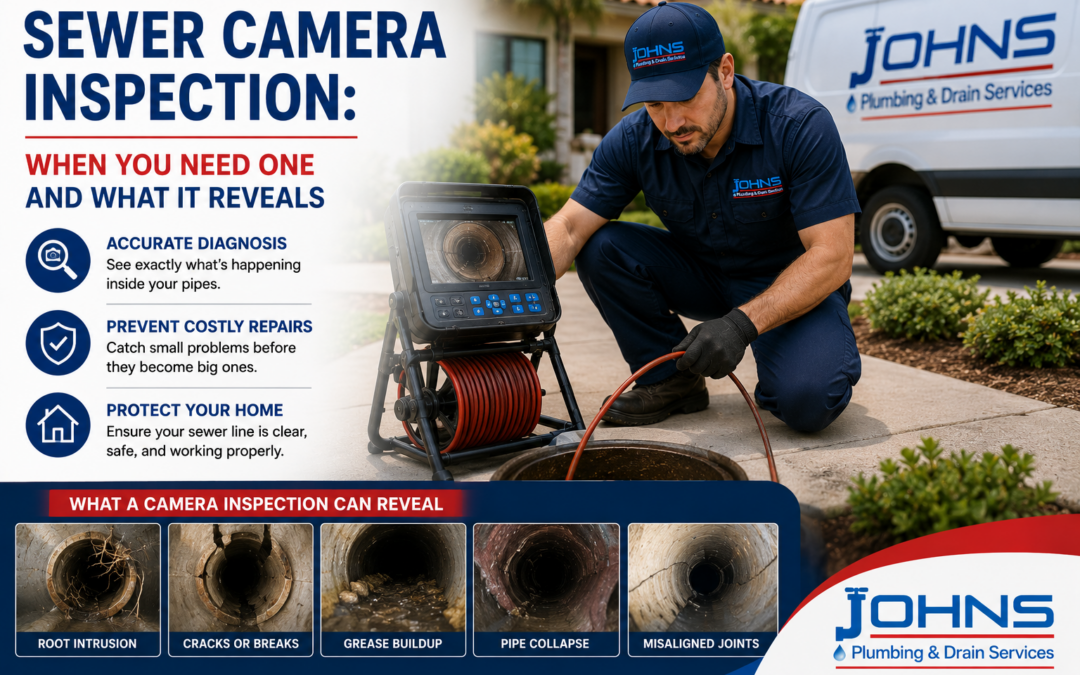
A licensed plumber will start by running a sewer camera inspection to locate the blockage and determine its cause. If the blockage is a soft clog from grease, sludge, or organic buildup, professional hydro jetting will clear the line completely and restore full flow. If the camera reveals root intrusion, the plumber will jet the roots out and may recommend epoxy pipelining to seal the entry points and prevent regrowth.
If the pipe itself has structural damage such as a collapse, severe offset, or missing section, sewer line repair or replacement becomes necessary to permanently solve the problem.
What You Can Do Right Now
Stop using the affected bathroom until the blockage is cleared. Every flush adds pressure to the system and increases the risk of a full backup. If you have a sewer cleanout access point in your yard, check whether standing water is visible inside the cap. Standing water at the cleanout confirms the blockage is in the main lateral rather than a single branch line.
Then call a professional plumber who can get a camera in the line and show you exactly what is happening underground.
FAQs
Is water backing up in the shower dangerous? It can be. The water coming up through the shower drain may contain bacteria and waste from the sewer system. Avoid contact with it, do not let children or pets near it, and clean the area with a disinfectant after the plumber clears the blockage.
Can I fix this myself with a plunger or drain cleaner? A plunger may provide temporary relief on a minor partial clog, but it will not solve a main line blockage. Chemical drain cleaners are not recommended because they can damage older pipes and rarely reach blockages deep in the sewer lateral.
How much does it cost to clear a main sewer line blockage? Costs vary depending on the severity and location of the blockage. A standard snaking or hydro jetting service is significantly less expensive than a full sewer line repair. Getting a camera inspection first gives you an accurate diagnosis so you only pay for what is actually needed.
Will this problem keep coming back? If the underlying cause is root intrusion or pipe damage, yes, the blockage will recur until the root entry points are sealed or the damaged section is repaired. A sewer camera inspection determines whether you need ongoing maintenance jetting or a permanent structural repair.