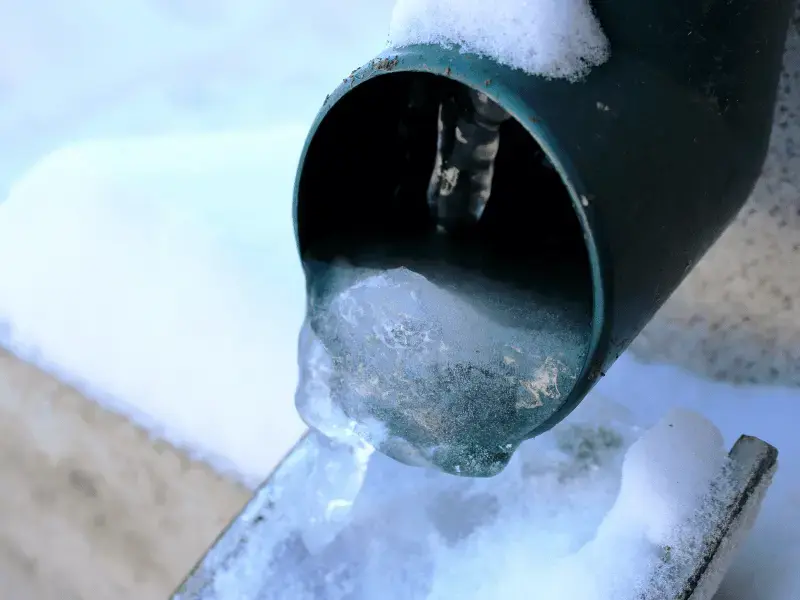
Quick Answer: Outdoor pipes can freeze after several continuous hours of subfreezing temperatures, most commonly within six to eight hours when exposure is high. The freezing risk increases sharply once temperatures drop below 32°F, and it accelerates near 20°F or lower, especially with wind and poor insulation. Pipes exposed to cold air lose heat rapidly, allowing ice formation inside pipes that restricts flow. When freezing continues, pressure buildup inside pipe sections raises the likelihood of damage. The most serious leaks often appear later, during thawing, when ice melts and water escapes through weakened points.
How Long Below Freezing for Pipes to Freeze Outdoors in Real Conditions
Outdoor plumbing freezes faster than most homeowners expect. In many situations, how long below freezing for pipes to freeze depends less on the calendar and more on exposure. Pipes that remain surrounded by cold air without protection can begin freezing in as little as six hours, while sheltered or partially insulated lines may take longer.
Once outdoor temperatures stay below 32°F (freezing point of water), pipes become vulnerable. When cold persists near 20°F or lower, freezing can happen overnight. This explains why many homeowners wake up to frozen plumbing after a single cold night.
Factors that shorten freeze time include rapid temperature drop, airflow across the pipe surface, and the absence of insulation. These conditions remove residual heat quickly and allow confined water expansion to begin inside the pipe.
How Cold Before Pipes Freeze Outdoors
Pipes do not require extreme arctic temperatures to freeze. The pipe freeze temperature threshold is much higher than many people assume.
Most outdoor pipes start freezing when:
- Air temperatures remain below 32°F
- Cold exposure lasts several continuous hours
- Pipes are uninsulated or poorly protected
The danger increases dramatically as temperatures approach 20°F or lower, especially when cold air moves freely around the pipe. In these cases, internal pipe pressure can build rapidly once ice forms.
Tip: Even when daytime temperatures rise above freezing, overnight lows can refreeze standing water, compounding damage risk.
Why Outdoor Pipes Freeze Faster than Indoor Pipes
Outdoor plumbing is more vulnerable because it lacks environmental buffering. Pipes inside walls benefit from residual indoor warmth, while outdoor pipes face direct cold exposure.
High-risk locations include:
- Exposed pipes along exterior walls
- Unheated areas such as sheds or garages
- Attics, basements, and crawl spaces
- Outdoor faucets / spigots
Cold air movement strips heat from metal surfaces, especially copper pipes and galvanized steel pipes, which conduct heat efficiently. Without pipe insulation, these materials cool quickly and allow ice blockage to form.
Will Pipes Freeze Overnight
Pipes can freeze overnight when conditions align. Continuous subfreezing temperatures combined with exposure often lead to overnight freezing, particularly during clear, windy nights.
This commonly occurs when:
- Temperatures drop suddenly after sunset
- Pipes are located on exterior walls
- Air leaks allow cold drafts across pipes
In such scenarios, how long below freezing for pipes to freeze may be less than a single night, especially for lines carrying little or no flowing water.
Quick Fix: Letting a faucet drip maintains water movement and reduces pressure buildup inside pipe sections.
What Actually Causes Pipes to Burst After Freezing
Frozen pipes do not fail simply because ice expands. The real danger comes from pressure buildup inside pipe sections when an ice blockage traps water.
As freezing continues:
- Water expands
- Pressure rises in confined areas
- The weakest section becomes a rupture point
Often, the pipe does not leak immediately. A delayed bursting after thaw is common, where ice temporarily seals cracks. Once temperatures rise, sudden thaw leakage can flood walls or floors.
If Pipes Freeze Will they Burst
If pipes freeze, will they burst depending on pressure relief and pipe condition. Not every frozen pipe fails, but the risk rises sharply with extended cold.
Pipes are more likely to burst when:
- They are uninsulated pipes
- They are located in outdoor pipes or drafty spaces
- Freezing persists for multiple days
- No outlet exists to relieve pressure
A pipe frozen but not burst is still dangerous, because thawing can expose hidden cracks. This is why knowing the immediate steps to take if a pipe burst is critical for damage control.
Drain Pipe Frozen Scenarios Homeowners Overlook
A drain pipe frozen situation is often ignored because drains do not carry pressurized water. However, frozen drains can block wastewater flow, leading to backups and interior flooding.
Drain lines freeze when:
- They are shallow or exposed
- They retain standing water
- Cold air reaches the pipe exterior
Frozen drains also increase stress on connected supply lines, raising overall burst pipe risk.
At What Temperature will PEX Pipe Freeze
PEX piping resists cracking better than rigid materials, but it still freezes. At what temperature will PEX pipe freeze depends on exposure and insulation, not just material.
PEX can tolerate expansion better than copper, but water expansion during freezing still occurs. Prolonged freezing leads to deformation, joint stress, and eventual leaks once thawing begins.
Material alone does not prevent freezing. Location, insulation, and airflow matter far more.
How Insulation Changes Freezing Timelines
Adding insulation significantly delays freezing by reducing heat loss. Proper insulating outdoor water pipes coverage slows temperature transfer and limits ice formation inside pipes.
Insulation methods include:
- Insulation sleeves
- Heat tape / heating tape
- Draft sealing around pipe entry points
This is one of the most effective ways to extend the time before freezing begins.
Outdoor Freeze Risk by Location
| Location | Freeze Speed | Risk Level |
| Outdoor faucet | Very fast | High |
| Exterior wall pipe | Fast | High |
| Crawl space | Moderate | Medium |
| Garage plumbing | Moderate | Medium |
| Insulated wall cavity | Slow | Lower |
Signs Outdoor Pipes are Freezing
Recognizing early warning signs can prevent catastrophic damage.
- Weak or no water flow
- Frost on exposed pipes
- Strange noises from pipes
- Reduced pressure at fixtures
If these appear, locate the main water shutoff valve immediately.
What to Do During Extended Freezing
- Keep faucets dripping to relieve pressure
- Open cabinets to circulate warm air
- Seal drafts near pipes
- Apply safe heat (no open flame)
Calling a local plumbing technician early can prevent a small freeze from becoming a major failure.
When Frozen Pipes Turn into Major Damage
Repeated freezing increases failure probability. In homes with aging or underground lines, understanding the benefits of pipe bursting becomes relevant when traditional repairs are no longer viable.
This is especially true after multiple winters of freeze-thaw stress.
Cost-Saving Prevention Strategies
| Prevention Step | Cost | Risk Reduction |
| Pipe insulation | Low | High |
| Faucet dripping | Free | Medium |
| Draft sealing | Low | High |
| Heat tape | Moderate | High |
Working with affordable pipe bursting experts is often discussed only after severe damage, but prevention remains far less costly.
Protect Your Home Before Freezing Damage Starts
Winter pipe damage escalates quickly once freezing begins. John’s Plumbing & Drain Services helps homeowners assess freeze risk, protect vulnerable lines, and respond fast when problems appear.
📞 Call: 3234227485 today to prevent frozen pipes from turning into costly repairs.
FAQs About How Long Below Freezing for Pipes to Freeze
Can pipes freeze above 32°F?
Yes, pipe temperature can drop below freezing even when air temperature briefly rises above 32°F.
Why do pipes burst after thawing?
Ice temporarily seals cracks. When ice melts, water escapes through weakened sections.
Do insulated pipes ever freeze?
Yes, insulation delays freezing but does not eliminate risk under prolonged cold.
Are outdoor drains at risk of freezing?
Yes, drain pipe frozen conditions can cause backups and water damage.
How fast can pipes freeze overnight?
In high exposure, freezing can occur within six hours.