If you have ever noticed a white, chalky residue around your faucets or a film on your glass shower doors that no amount of scrubbing seems to eliminate, you are already familiar with the effects of hard water. Los Angeles receives a significant portion of its water supply from the Colorado River and the State Water Project, both of which carry elevated mineral content — primarily calcium and magnesium — by the time they reach your tap.
That mineral content does more than leave water spots on your dishes. Over time, it quietly damages your entire plumbing system.
What Hard Water Does Inside Your Pipes
When hard water flows through your pipes, dissolved minerals gradually deposit along the interior walls. This process, called scale buildup, narrows the internal diameter of the pipe over months and years. In older galvanized steel pipes — still common across many Los Angeles neighborhoods — scale accumulates faster because the corroded interior surface gives minerals more texture to grip onto.
The result is reduced water flow, lower pressure at your fixtures, and eventually restrictions severe enough to require professional drain cleaning or pipe replacement. Scale also creates rough spots inside pipes where hair, soap residue, and grease catch more easily, accelerating clog formation.
The Appliance Damage You Do Not See
Your water heater takes the hardest hit from mineral-rich water. Inside a standard tank water heater, calcium settles at the bottom where the burner operates. That sediment layer acts as insulation between the flame and the water, forcing the unit to work harder and longer to heat the same volume. Energy bills go up, the tank overheats at the bottom, and the lifespan of the unit drops significantly.
Tankless water heaters are not immune either. Scale accumulates on the heat exchanger and reduces efficiency over time, which is why annual flushing is critical for tankless systems in hard water areas. The U.S. Geological Survey classifies water hardness levels and notes that most of Southern California falls in the moderately hard to very hard range.
Dishwashers, washing machines, and ice makers all suffer similar effects. Mineral deposits clog inlet valves, coat heating elements, and reduce the effectiveness of detergents. Replacing appliances every five years instead of ten because of preventable scale damage is an expensive pattern that many LA homeowners fall into without realizing the root cause.
Signs Your Home Has a Hard Water Problem
Beyond the visible mineral stains on fixtures, watch for these indicators: soap that does not lather well, laundry that feels stiff after washing, recurring slow drains in bathroom sinks and showers, and a drop in hot water performance despite a relatively new water heater. If multiple fixtures in your home show reduced pressure simultaneously, scale restriction inside the supply lines is a likely culprit.
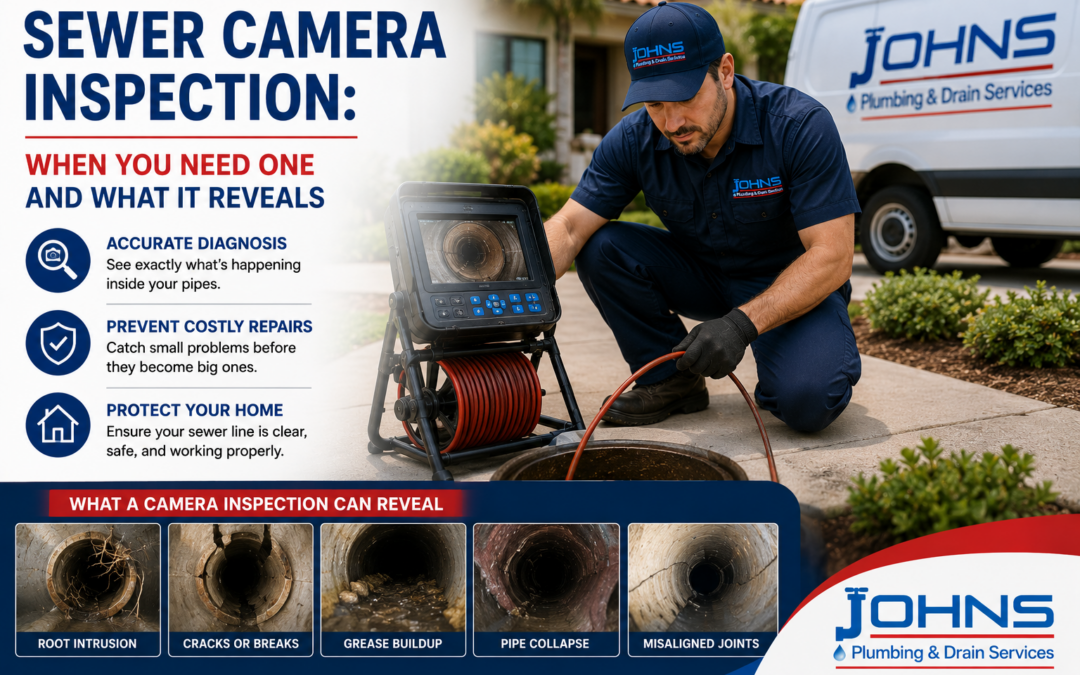
A plumber can test your water hardness level and inspect the interior condition of accessible pipes. In severe cases, a camera inspection of drain lines can reveal how much buildup exists in sections you cannot see.
What You Can Do About It
A whole-house water softener or water conditioning system is the most effective long-term solution for hard water in Los Angeles. These systems remove calcium and magnesium before water enters your home’s plumbing, dramatically reducing scale formation. A licensed plumber can recommend the right system size based on your household usage and water hardness level.
For existing buildup, professional hydro jetting can scour the interior of drain and sewer lines, restoring full diameter and flow. Annual water heater flushing is another essential maintenance step that prevents sediment from shortening the life of your system.
Hard water is not a plumbing emergency — it is a slow-moving problem that compounds over years. But addressing it now saves you from premature appliance replacements, persistent clogged drains, and the gradual decline of your home’s plumbing performance.